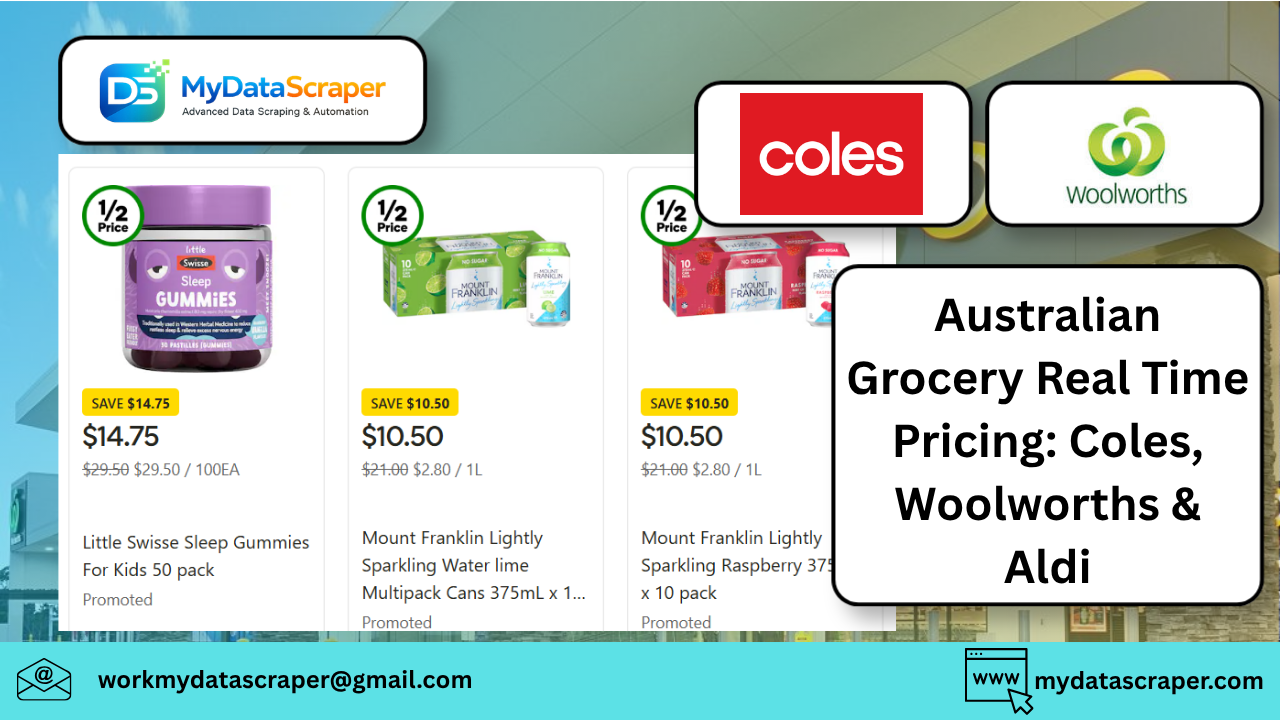
If you’ve ever walked into a supermarket expecting one price and found another—either pleasantly cheaper or frustratingly higher—you’ve already experienced the impact of real-time pricing. Now imagine that happening not randomly, but strategically, powered by data, algorithms, and consumer behavior.
Welcome to the world of Australian grocery real-time pricing—a fast-evolving trend that is quietly reshaping how retailers operate and how consumers shop.
In this blog, we’ll explore what real-time pricing means in the Australian grocery landscape, why it matters, how businesses are using it, and what it means for everyday shoppers. Along the way, I’ll share some relatable scenarios and insights that bring this concept to life.
What is Real-Time Pricing in Grocery Retail?
Real-time pricing refers to the ability of retailers to adjust product prices dynamically based on various factors, such as:
- Supply and demand
- Competitor pricing
- Time of day or season
- Inventory levels
- Customer purchasing patterns
Unlike traditional pricing—which might stay fixed for weeks—real-time pricing can change multiple times a day.
A Personal Shopping Experience (You’ll Probably Relate)
A few months ago, I was helping a friend who runs a small online grocery comparison tool. We were tracking the price of everyday items like milk, bread, and eggs across different retailers.
One thing stood out:
A carton of milk dropped in price late evening at one retailer, likely to clear inventory before closing, while another store increased the same product’s price during peak hours.
That moment made it clear—pricing is no longer static. It’s alive, constantly shifting, and deeply strategic.
And if you’re a business relying on outdated pricing data, you’re already behind.
Why Real-Time Pricing is Gaining Momentum in Australia
Australia’s grocery market is highly competitive, and margins are tight. Retailers are constantly looking for ways to:
- Improve profitability
- Reduce waste
- Stay competitive
- Enhance customer experience
Real-time pricing helps achieve all of these goals.
1. Intense Competition
Major retailers and emerging online grocery platforms are constantly under pressure to offer the best deals. Real-time pricing allows them to instantly respond to competitor price changes.
2. Rise of Online Grocery Shopping
With more consumers shopping online, price comparison has become easier than ever. Customers can switch platforms within seconds—forcing retailers to stay agile.
3. Inventory Optimization
Perishable goods like fruits, vegetables, and dairy benefit immensely from dynamic pricing. Lowering prices near expiry reduces waste and recovers revenue.
How Real-Time Pricing Works (Behind the Scenes)
At its core, real-time pricing relies on data collection and automation.
Here’s a simplified breakdown:
- Data Collection
Retailers gather data from:- Competitor websites
- Internal sales systems
- Market trends
- Analysis & Algorithms
Pricing engines analyze this data using rules or AI models. - Price Adjustment
Prices are updated automatically on:- Websites
- Mobile apps
- In-store digital displays
- Continuous Monitoring
The system keeps learning and optimizing.
Key Benefits of Real-Time Pricing
1. Better Profit Margins
Retailers can increase prices during high demand and reduce them when needed to boost sales volume.
2. Reduced Food Waste
Dynamic discounts on near-expiry items help sell products that would otherwise go to waste.
3. Competitive Advantage
Businesses can react instantly to competitor pricing instead of waiting days or weeks.
4. Improved Customer Experience
Customers benefit from:
- Better deals
- More relevant pricing
- Timely discounts
Real-Life Scenario: Weekend Grocery Rush
Let’s paint a picture.
It’s Saturday morning. Families are stocking up for the week. Demand is high.
- Prices on essentials might increase slightly due to demand.
- Discounts may shift to less popular items.
Now fast forward to Sunday evening:
- Fresh produce nearing expiry gets discounted.
- Bulk items may see flash deals to clear stock.
This isn’t random—it’s data-driven pricing in action.
Challenges of Real-Time Pricing
Of course, it’s not all smooth sailing.
1. Customer Trust
If prices fluctuate too often, customers may feel uncertain or even manipulated.
2. Technical Complexity
Implementing real-time pricing requires:
- Strong infrastructure
- Reliable data pipelines
- Advanced analytics
3. Regulatory Considerations
Pricing transparency is critical. Retailers must ensure they comply with fair pricing regulations.
The Role of Data Scraping in Real-Time Pricing
Here’s where things get interesting—especially for businesses.
To implement effective real-time pricing, companies need accurate and up-to-date competitor data.
This is where web scraping becomes essential.
Businesses use scraping tools to:
- Monitor competitor prices
- Track product availability
- Analyze promotions and discounts
- Identify market trends
Without this data, pricing decisions are just guesswork.
How MyDataScraper Can Help
If you’re looking to leverage real-time pricing in the Australian grocery market, having the right data is everything.
MyDataScraper empowers businesses with:
✔ Real-Time Competitor Price Monitoring
Track prices across multiple grocery platforms automatically.
✔ Scalable Data Extraction
Extract thousands of product listings, prices, and availability in real time.
✔ Custom Data Solutions
Tailored scraping setups based on your business needs.
✔ Actionable Insights
Turn raw data into meaningful pricing strategies.
Whether you’re a retailer, aggregator, or analytics company, MyDataScraper helps you stay ahead in a highly competitive market.
The Future of Grocery Pricing in Australia
Real-time pricing is just the beginning.
Here’s what we can expect next:
1. AI-Driven Personalization
Prices tailored to individual shopping behavior.
2. Smart Shelves
Digital shelf labels updating prices instantly in-store.
3. Hyperlocal Pricing
Prices varying by location, demand, and demographics.
4. Integration with Supply Chains
Pricing linked directly to logistics and inventory systems.
What This Means for Consumers
As a shopper, real-time pricing can actually work in your favor—if you know how to navigate it.
Tips for Smart Shopping:
- Shop during off-peak hours for better deals
- Compare prices across platforms
- Watch for end-of-day discounts on perishables
- Use price tracking tools
Final Thoughts
Australian grocery real-time pricing is transforming the retail landscape in powerful ways. What was once a static process is now dynamic, responsive, and deeply data-driven.
For businesses, it’s an opportunity to:
- Maximize profits
- Reduce waste
- Stay competitive
For consumers, it offers:
- Better deals
- Smarter shopping opportunities
But at the heart of it all lies data—and the ability to collect, analyze, and act on it in real time.
Let’s Start a Conversation
Have you noticed price changes while grocery shopping recently?
Do you think real-time pricing benefits consumers—or does it create confusion?
I’d love to hear your thoughts—drop a comment and share your experience!
Need Help with Real-Time Pricing Data?
If you’re ready to take your pricing strategy to the next level or want to explore how real-time grocery data can benefit your business, we’re here to help.
👉 Get in touch with us today: https://www.mydatascraper.com/contact-us/
Let’s turn data into your competitive advantage 🚀