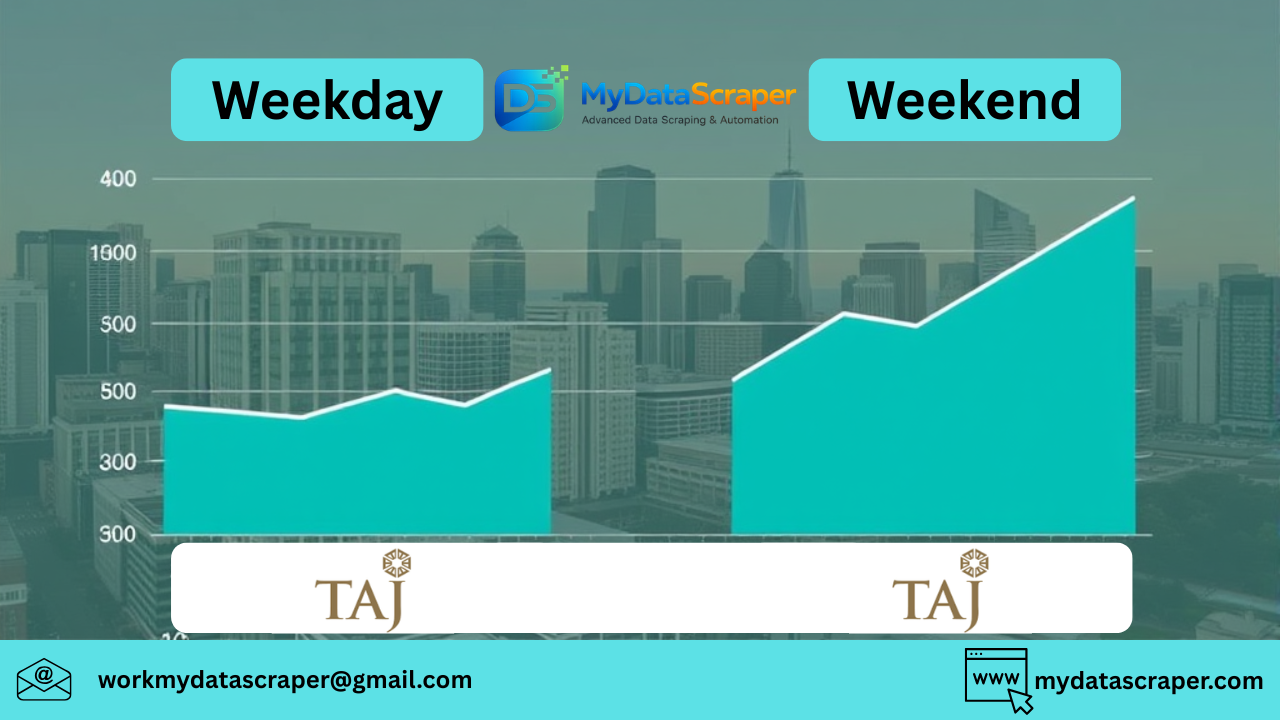
If you’ve ever booked a hotel at the last minute, you’ve probably noticed something puzzling: the same hotel room can cost dramatically different prices depending on the day of the week.
One time, I was helping a friend plan a quick getaway. We found a hotel listed for ₹3,500 per night on a Tuesday. Everything looked perfect—good reviews, great location, and a comfortable room. But when we checked the price again for Saturday, the rate had jumped to nearly ₹6,000.
Same room. Same hotel. Same city.
The only difference? It was the weekend.
This is the reality of modern hospitality pricing. Hotels constantly adjust their rates based on demand, competition, and booking patterns. Platforms like Grab—well known for ride-hailing and delivery services—are increasingly becoming part of the travel and hospitality ecosystem, offering hotel listings and deals in many Southeast Asian markets.
By analyzing scraped hotel data from Grab listings, we can uncover fascinating patterns about how prices change between weekdays and weekends. These insights are incredibly valuable for travelers, hotel operators, and businesses analyzing the hospitality market.
Let’s explore what the data reveals.
Why Hotel Prices Change So Often
Hotel pricing today is rarely static. Most properties use dynamic pricing systems that adjust rates based on multiple factors.
These factors often include:
- Day of the week
- Seasonal demand
- Local events
- Competitor pricing
- Occupancy levels
- Booking lead time
Among these variables, weekday vs weekend demand is one of the strongest drivers of price variation.
Business travelers usually dominate weekday bookings, while leisure travelers fill rooms on weekends. This shift in customer type often leads to noticeable pricing differences.
And when you collect large volumes of hotel listing data from platforms like Grab, those differences become crystal clear.
What Grab Hotel Data Can Reveal
Scraping hotel listings from Grab can provide a surprisingly detailed snapshot of the hospitality market.
Typical data fields include:
- Hotel name
- Location
- Room type
- Nightly price
- Ratings and reviews
- Promotions or discounts
- Availability by date
When you gather this information across multiple days and cities, you can build a pricing dataset that reveals patterns in hotel demand.
For example, by comparing prices for the same hotel across different days of the week, analysts can identify:
- Average weekday pricing
- Average weekend pricing
- Price spikes
- Discount strategies
- Regional differences
These patterns form the foundation of a weekday vs weekend pricing report.
The First Pattern: Weekend Price Surges
The most obvious trend that appears in scraped data is the weekend price surge.
Across many hotel listings, prices tend to rise from Friday through Sunday.
Here’s a typical pattern seen in hotel datasets:
| Day | Average Price Trend |
|---|---|
| Monday | Lower |
| Tuesday | Lower |
| Wednesday | Moderate |
| Thursday | Rising |
| Friday | High |
| Saturday | Highest |
| Sunday | Slight drop |
Saturday night is usually the most expensive booking day.
Why?
Because it captures peak leisure demand. Couples, families, and tourists are far more likely to travel during weekends.
Hotels respond by increasing prices.
A Relatable Booking Story
Let’s say you’re planning a short trip to Kuala Lumpur.
You open the Grab app and find a stylish boutique hotel near the city center.
The price breakdown looks like this:
- Wednesday night: ₹4,200
- Thursday night: ₹4,500
- Friday night: ₹5,600
- Saturday night: ₹6,100
Suddenly, that two-night weekend trip becomes significantly more expensive than a weekday stay.
This isn’t random—it’s a deliberate pricing strategy driven by demand patterns.
And when you analyze thousands of listings, these patterns become even clearer.
Business Travel vs Leisure Travel
Another interesting insight from scraped hotel data is the difference between business travel demand and leisure travel demand.
Weekday Travelers
Weekday bookings often come from:
- Business travelers
- Conference attendees
- Corporate consultants
- Sales teams
These travelers prioritize convenience over price.
Hotels in business districts sometimes maintain steady weekday prices because demand remains consistent.
Weekend Travelers
Weekend bookings tend to come from:
- Tourists
- Couples
- Families
- Staycation travelers
These travelers often compare prices across multiple platforms.
Hotels respond by adjusting pricing depending on expected occupancy.
This creates the typical Friday and Saturday price peaks seen in hotel datasets.
Promotional Patterns in Hotel Listings
Scraped Grab hotel data also reveals interesting promotional behavior.
Hotels frequently introduce special offers to fill rooms during low-demand periods.
Common weekday promotions include:
- Midweek discounts
- Free breakfast packages
- Stay-three-pay-two deals
- Early booking offers
These strategies help hotels increase occupancy when demand drops.
When you compare weekday and weekend listings, you’ll often notice more aggressive discounts during weekdays.
City-Level Pricing Differences
Another fascinating insight from scraped data is how pricing patterns differ by city.
Let’s consider three common scenarios.
Tourist Cities
In tourist-heavy destinations, weekend demand tends to spike dramatically.
Examples include:
- Beach destinations
- Resort towns
- Heritage cities
Hotels in these areas may see 30–50% weekend price increases.
Business Hubs
In major business cities, the pattern can sometimes flip.
Weekday demand from corporate travelers keeps hotel prices high, while weekends may see discounts.
Cities with strong business travel markets often show flatter pricing curves across the week.
Mixed-Demand Cities
Cities with both tourism and business travel show the most interesting patterns.
Pricing fluctuates depending on:
- Conferences
- Festivals
- Public holidays
- School vacation periods
These variables can create unexpected price spikes even on weekdays.
The Role of Real-Time Data Monitoring
One key takeaway from analyzing Grab hotel listings is how quickly prices can change.
Hotels may adjust prices several times a day depending on:
- Room availability
- Competitor pricing
- Booking activity
Without automated data collection, tracking these changes manually would be nearly impossible.
This is why many analysts rely on large-scale data scraping and automated monitoring systems.
These systems collect pricing data continuously, enabling businesses to track trends over time.
Why This Data Matters
Understanding weekday vs weekend pricing patterns offers several strategic advantages.
For Travelers
Travelers can save money by:
- Booking weekday stays
- Avoiding peak demand periods
- Monitoring price fluctuations
A flexible schedule can significantly reduce travel costs.
For Hotels
Hotels use pricing data to refine revenue strategies.
By analyzing competitor pricing and demand trends, hotels can:
- Optimize room rates
- Increase occupancy
- Improve revenue per available room
Data-driven pricing is now standard in the hospitality industry.
For Market Analysts
Hospitality analysts use scraped data to understand broader market behavior.
These insights help identify:
- Emerging travel trends
- Seasonal demand shifts
- Competitive pricing strategies
For example, analysts may discover that weekend prices are rising faster in certain cities—an indicator of growing tourism demand.
The Future of Hotel Pricing Intelligence
The hospitality industry is becoming increasingly data-driven.
In the near future, we’ll likely see more advanced analytics applied to hotel pricing datasets, including:
- AI-powered demand forecasting
- Real-time price monitoring
- Competitive benchmarking dashboards
- Dynamic pricing optimization tools
Platforms like Grab will continue to generate massive volumes of hospitality data, making them valuable sources of market insights.
Businesses that can analyze this data effectively will gain a significant advantage.
Final Thoughts
The next time you notice a hotel room price jump from Wednesday to Saturday, remember: it’s not random.
It’s part of a sophisticated pricing ecosystem driven by demand patterns, traveler behavior, and competitive strategy.
Scraped Grab hotel data helps uncover these hidden dynamics, revealing how hotels adjust pricing to maximize occupancy and revenue.
Whether you’re a traveler looking for better deals, a hotel operator refining your pricing strategy, or a market analyst studying hospitality trends, this data offers powerful insights into how the industry works.
And honestly, once you start noticing these patterns, hotel pricing suddenly becomes a lot more interesting.
What Do You Think?
Have you ever noticed huge price differences between weekday and weekend hotel bookings?
Do you usually plan your trips around cheaper weekdays, or do weekends still win?
Share your experiences and thoughts in the comments—we’d love to hear how you approach hotel bookings!
Need Help Extracting Hotel Pricing Data?
If you’re interested in analyzing hotel pricing patterns, monitoring travel platforms, or extracting large-scale hospitality datasets, the right data solutions can help you unlock valuable insights.
For more information or personalized assistance, feel free to reach out through our contact page:
👉 https://www.mydatascraper.com/contact-us/
Our team would be happy to help you turn raw platform data into actionable market intelligence.
Thanks for reading, and happy travels! ✈️