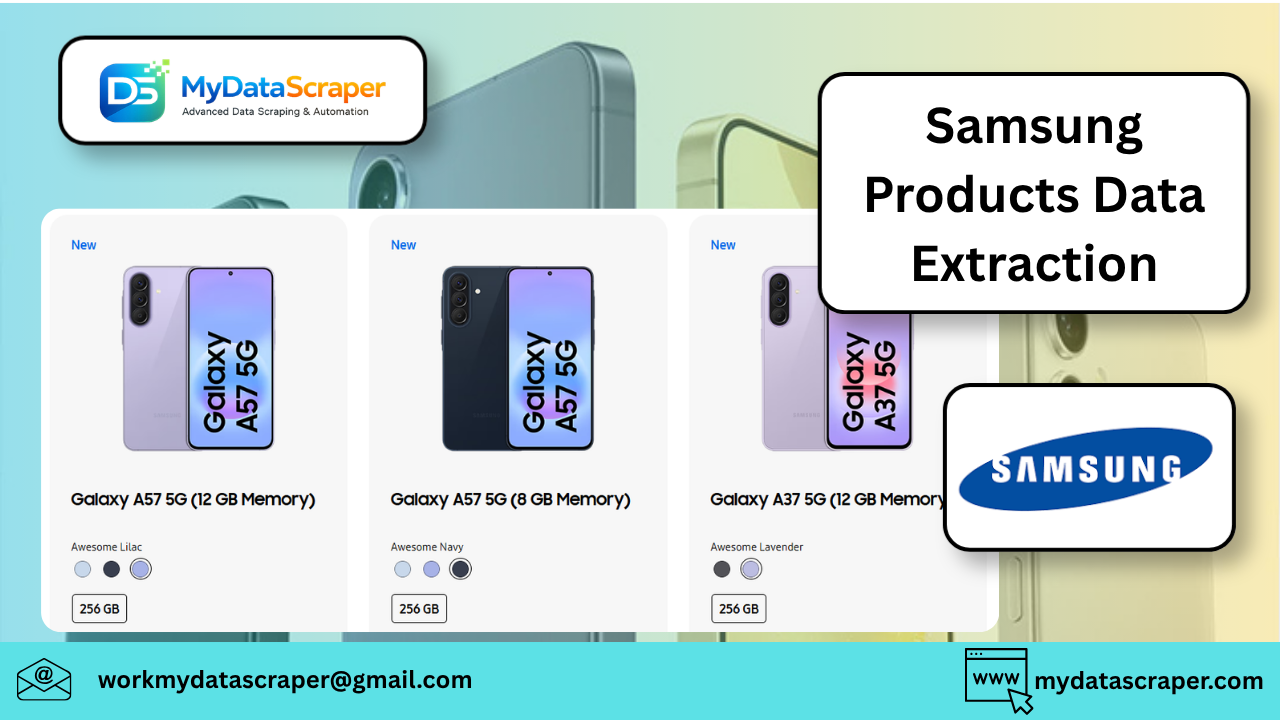
If you’ve ever compared Samsung products online—maybe a smartphone, a TV, or even a washing machine—you’ve probably noticed how quickly things change.
Prices fluctuate across platforms. New models appear frequently. Reviews pile up within days of a launch. And sometimes, the same product looks completely different depending on where you view it.
Behind all of this lies a powerful opportunity:
👉 Samsung product data can reveal market trends, pricing strategies, and customer preferences in real time.
In this blog, we’ll explore how to extract Samsung product data, what insights you can derive, and how businesses are using this data to stay competitive.
Why Focus on Samsung Product Data?
Samsung is one of the largest consumer electronics brands globally, with a massive presence across:
- Smartphones
- Televisions
- Home appliances
- Wearables
- Accessories
Because of this wide product range, Samsung data provides:
- High-volume, real-time market signals
- Cross-category insights
- Strong competitor benchmarking opportunities
A Real-World Observation
A retailer I spoke with was tracking Samsung smartphones across multiple platforms.
They noticed something interesting:
- Prices dropped faster on certain marketplaces
- Reviews increased rapidly within the first week of launch
- Some variants (like higher storage models) sold out quicker
That insight helped them:
- Adjust pricing
- Manage inventory better
- Promote high-demand variants
What Samsung Product Data Can You Extract
To build meaningful insights, you need to extract the right data.
Product Information
- Product name (e.g., Galaxy S series, Smart TVs)
- Model number / SKU
- Specifications (RAM, storage, display, etc.)
- Category
Pricing Data
- Current price
- Original price (MRP)
- Discounts and offers
Reviews & Ratings
- Average rating
- Number of reviews
- Customer feedback
Availability Data
- Stock status
- Variant availability
Seller & Platform Data
- Seller name
- Platform-specific listings
- Delivery details
Where to Extract Samsung Product Data From
Samsung products are listed across multiple platforms.
eCommerce Marketplaces
- Amazon
- Flipkart
- Regional marketplaces
Official Brand Website
- Product specifications
- Launch details
- Official pricing
Retailer Websites
- Local electronics stores
- Online resellers
Each source provides a different layer of insight.
Methods to Extract Samsung Product Data
1. HTML-Based Scraping
This involves extracting data directly from webpage structure.
Best for:
- Product listings
- Basic details
2. API-Based Extraction
Some platforms load product data via APIs.
Advantages:
- Structured JSON data
- Faster and cleaner extraction
3. Browser Automation
Used for dynamic websites where content loads via JavaScript.
Tools commonly used:
- Automation frameworks
- Headless browsers
4. Multi-Platform Aggregation
For deeper insights, businesses combine data from multiple sources.
This helps in:
- Cross-platform price comparison
- Identifying inconsistencies
- Building richer datasets
Key Challenges in Samsung Data Extraction
Dynamic Pricing
Prices change frequently due to:
- Sales
- Discounts
- Competition
Variant Complexity
One product may have:
- Multiple storage options
- Different colors
- Region-specific models
Anti-Bot Systems
Many platforms restrict automated access.
Data Duplication
Same product may appear multiple times across platforms.
Real-World Use Cases
1. Price Monitoring
Track how Samsung product prices change across platforms.
2. Competitor Analysis
Compare pricing strategies and offers.
3. Demand Insights
Identify:
- High-selling models
- Popular variants
- Trending categories
4. Review Analysis
Understand customer sentiment and product performance.
A Practical Scenario
Let’s say you’re an electronics seller.
By analyzing Samsung product data, you might discover:
- Mid-range smartphones dominate sales
- Discounts increase significantly during sales events
- High-rated products sell faster even at higher prices
With this insight, you can:
- Stock the right products
- Price competitively
- Improve marketing strategies
Best Practices for Data Extraction
Focus on Relevant Data
Avoid collecting unnecessary fields.
Normalize Data
Standardize:
- Product names
- Pricing formats
- Categories
Automate Regular Updates
Ensure data remains fresh and accurate.
Monitor Changes
Track website structure and data patterns.
How MyDataScraper Can Help
At this point, it’s worth addressing a practical challenge.
Extracting Samsung product data sounds straightforward—but maintaining a reliable system is where things get complex.
- Websites change frequently
- Anti-bot systems block requests
- Data pipelines break unexpectedly
- Scaling across platforms requires infrastructure
This is where MyDataScraper can make a real difference.
What You Get with MyDataScraper
Instead of building and maintaining scraping systems internally, you get:
- Custom-built data extraction tailored to Samsung product tracking
- Multi-platform data aggregation (Amazon, Flipkart, etc.)
- Clean, structured, ready-to-use datasets
- Handling of anti-bot challenges and dynamic content
- Scalable pipelines with ongoing maintenance
A Practical Advantage
Rather than spending weeks setting up scrapers and fixing issues, businesses can focus on:
- Analyzing data
- Making decisions
- Growing their operations
👉 In short, you get data without the operational overhead.
The Future of Electronics Data Intelligence
As competition increases, data will play an even bigger role.
We’re moving toward:
- Real-time price intelligence
- AI-driven demand prediction
- Automated competitor tracking
- Hyper-detailed product analytics
Samsung, being a global leader, will continue to generate massive data signals.
Final Thoughts
Extracting Samsung product data isn’t just about collecting information—it’s about understanding the market.
Every price change, review, and product listing tells a story.
And when you connect those stories, you gain insights that drive smarter business decisions.
Let’s Continue the Conversation
When you shop for electronics, what influences your decision the most?
- Price?
- Reviews?
- Brand trust?
- Features?
Your answer reflects the same data businesses analyze every day.
Need Help Extracting Samsung Product Data?
If you’re looking to build a reliable and scalable system for extracting Samsung product data:
👉 Visit: https://www.mydatascraper.com/contact-us/
Let’s turn product data into actionable business intelligence 🚀