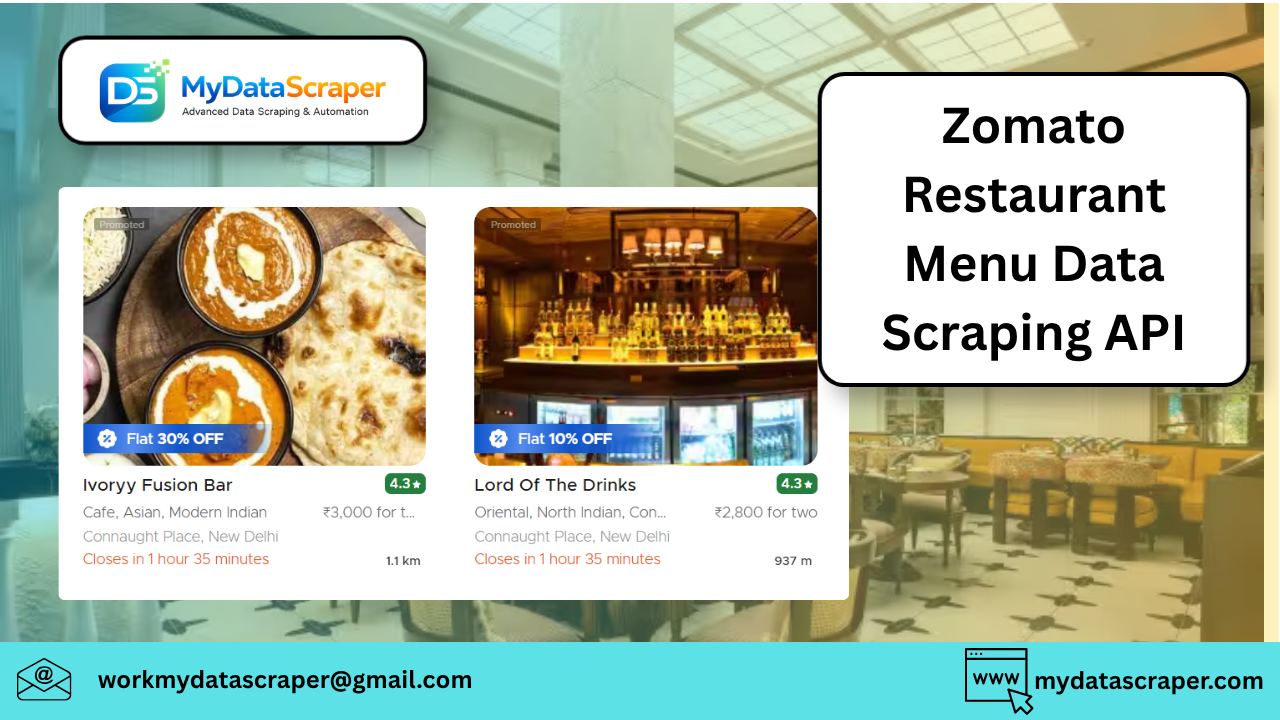
If you’ve ever browsed through a food delivery app and noticed how neatly everything is structured—menus, prices, categories, combos—it’s easy to forget that behind the interface lies a complex data delivery system.
For businesses, this structured data is incredibly valuable.
From analyzing menu pricing to identifying popular dishes, extracting restaurant menu data can unlock insights that directly influence pricing strategy, product positioning, and operational decisions.
In this guide, we’ll walk through how to scrape restaurant menu data from Zomato using API-based methods, along with practical considerations, challenges, and real-world use cases.
Why Focus on API-Based Extraction?
When it comes to modern platforms like Zomato, traditional HTML scraping often falls short.
Menus, pricing, and availability are usually loaded dynamically via APIs.
That means:
👉 Instead of parsing messy HTML, you can access clean, structured JSON data
👉 Faster extraction with fewer errors
👉 Better scalability for large datasets
In short, API-based scraping is more efficient and reliable—when done correctly.
A Quick Real-World Insight
A food startup I worked with wanted to understand pricing trends across similar restaurants.
Initially, they tried manual research.
It didn’t scale.
Then they switched to API-based data extraction.
Within days, they had:
- Menu-level pricing data
- Category-wise dish breakdowns
- Competitor insights across locations
That shift—from manual to structured data—completely changed their decision-making process.
What Menu Data Can You Extract?
Using API-based methods, you can typically access:
Restaurant Information
- Restaurant name
- Location
- Cuisine types
- Ratings and reviews
Menu Structure
- Categories (e.g., starters, main course, desserts)
- Subcategories
- Item grouping
Item-Level Data
- Dish name
- Description
- Price
- Images
Variants & Add-ons
- Half/full portions
- Customizations (extra cheese, add-ons, etc.)
Availability Signals
- In-stock / out-of-stock
- Time-based availability
Offers & Tags
- Bestseller tags
- Recommended items
- Discounts or combos
Step-by-Step: How API-Based Scraping Works
Let’s walk through the actual process in a practical way.
Step 1: Identify the Restaurant Page
Start with a restaurant listing on Zomato.
This page acts as your entry point.
Step 2: Inspect Network Requests
Open your browser’s developer tools and go to:
👉 Network → XHR / Fetch
Then reload the page.
You’ll notice multiple API calls being made in the background.
Look for requests related to:
- Menu
- Restaurant details
- Listings
Step 3: Locate the Menu API Endpoint
Once identified, you’ll find an API endpoint that returns menu data in JSON format.
This response typically includes:
- Categories
- Items
- Pricing
- Metadata
Step 4: Replicate the API Request
Using tools like Python, you can replicate this request.
Example:
import requestsurl = "API_ENDPOINT_URL"headers = {
    "User-Agent": "Mozilla/5.0",
    "Accept": "application/json"
}response = requests.get(url, headers=headers)data = response.json()print(data)
Step 5: Parse the JSON Data
Once you receive the response, extract relevant fields:
menu.categoriesitems.nameitems.price
Structure the data into a usable format like:
- CSV
- JSON
- Database
Step 6: Handle Pagination & Location
Some APIs return partial data.
You may need to:
- Loop through pages
- Pass location parameters
- Handle restaurant IDs
Key Challenges You Should Expect
While API-based scraping is powerful, it’s not always straightforward.
1. Authentication & Headers
Some API calls require:
- Tokens
- Cookies
- Session headers
Without these, requests may fail.
2. Location-Based Data
Menus may vary based on:
- Delivery location
- Time of day
This adds complexity to your data pipeline.
3. Rate Limiting
Sending too many requests can trigger:
- Temporary blocks
- Throttling
4. API Changes
Endpoints and response structures can change without notice.
5. Anti-Bot Systems
Even API calls are monitored.
You may need:
- Proxy rotation
- Request throttling
- Header management
Real-World Use Cases
This is where API-based scraping becomes truly valuable.
1. Menu Intelligence
Understand:
- Popular dishes
- Pricing strategies
- Category trends
2. Competitive Pricing Analysis
Compare:
- Dish-level pricing
- Platform differences
- Discount strategies
3. Cloud Kitchen Optimization
For new businesses:
- Identify high-demand cuisines
- Optimize pricing
- Design better menus
4. Delivery Platform Comparison
Analyze differences between platforms in terms of:
- Pricing
- Availability
- Delivery efficiency
A Practical Scenario
Let’s say you’re launching a cloud kitchen.
By extracting menu data from Zomato, you might discover:
- Combo meals outperform single dishes
- Mid-range pricing (₹150–₹300) dominates
- Fast-moving items have fewer customization options
With this insight, you can:
- Design a focused menu
- Improve margins
- Increase order volume
Best Practices for API-Based Scraping
Keep Requests Realistic
Mimic real user behavior with proper headers and delays.
Focus on Relevant Data
Avoid extracting unnecessary fields.
Normalize Data
Standardize:
- Prices
- Categories
- Item names
Monitor Your Pipeline
Track:
- Failures
- API changes
- Data quality
Legal & Ethical Considerations
This is essential.
- Review platform terms of service
- Avoid scraping personal or sensitive data
- Use data responsibly
- Ensure compliance with applicable laws
The Bigger Picture
Food delivery platforms are evolving into data-driven ecosystems.
With API-based extraction, businesses can move from:
👉 Guesswork
to
👉 Data-backed decisions
And that shift can define competitive success.
Final Thoughts
Scraping restaurant menu data via APIs isn’t just about accessing information—it’s about understanding the structure behind the platform.
When done right, it gives you:
- Cleaner data
- Faster extraction
- Deeper insights
But it also requires:
- Technical awareness
- Responsible usage
- Ongoing maintenance
Let’s Continue the Conversation
When you browse a food app, what influences your choice the most?
- Price?
- Ratings?
- Menu variety?
- Offers?
Your answer is exactly the kind of insight businesses try to uncover.
Need Help Extracting Zomato Menu Data?
If you’re looking to build a reliable pipeline for extracting restaurant menus, pricing, and insights from Zomato, we can help.
👉 Get started here:
https://www.mydatascraper.com/contact-us/
Let’s turn food delivery data into actionable intelligence 🍽️🚀