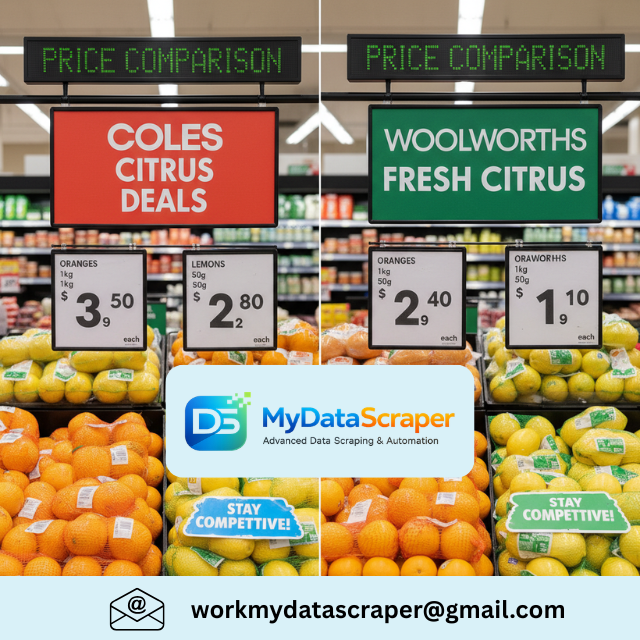
In Australia’s highly competitive supermarket landscape, Coles and Woolworths dominate the grocery sector, controlling a significant share of fresh produce sales. Citrus fruits—oranges, lemons, limes, mandarins, and grapefruit—are among the most price-sensitive categories due to seasonal supply fluctuations, weather impacts, and high consumer demand year-round. Small differences in pricing can sway shopper loyalty, influence basket size, and determine which chain wins the weekly shop.
Recent analyses from 2026 show that citrus pricing between Coles and Woolworths can vary by up to 22% depending on season, region, and promotional activity. Woolworths often deploys sharper discounts on lemons and mandarins during key campaigns, while Coles tends to hold steadier baseline prices on oranges. These dynamics highlight why real-time price monitoring through web scraping has become essential for brands, suppliers, and even smaller retailers aiming to remain competitive.
At WebDataScraper, we provide custom, scalable scraping solutions that extract high-quality citrus and fresh produce pricing data from Coles, Woolworths, and other Australian retailers. Delivered in CSV, JSON, or Excel formats, our data empowers brands to track trends, benchmark performance, and respond swiftly to market shifts. In this detailed 1,800+ word guide, we’ll break down current citrus price comparison insights, seasonal patterns, and practical strategies for staying ahead in 2026.
The Australian Citrus Market and Supermarket Pricing Dynamics
Australia produces around 700,000–800,000 tonnes of citrus annually, with oranges (especially navel and Valencia varieties) leading production, followed by lemons and mandarins. Prices at retail are heavily influenced by:
- Seasonal supply: Winter peaks bring lower orange prices; summer shortages push costs up.
- Weather events: Floods, droughts, or cyclones can cause sudden spikes.
- Import dynamics: Off-season reliance on imports for certain varieties.
- Retailer strategies: Coles and Woolworths use citrus as a key traffic driver—low prices on staples attract shoppers who then buy higher-margin items.
Both chains face pressure from Aldi (often 15–25% cheaper overall) and independent grocers. In fresh produce specifically, the price war is intense, with citrus frequently used for promotions to signal value.
Ethical web scraping allows brands to capture daily shelf prices, promo flags, unit vs. per-kg displays, and regional variations—insights impossible to gather manually at scale.
Current Coles vs Woolworths Citrus Price Comparison (2026 Insights)
Based on recent scraped data analyses from Australian retail intelligence sources, here’s a snapshot of typical citrus pricing patterns in early 2026 (national averages, AUD per kg unless noted):
| Citrus Item | Season/Period | Coles Avg Price (AUD/kg) | Woolworths Avg Price (AUD/kg) | Typical Gap | Notes |
|---|---|---|---|---|---|
| Oranges (Navel/Valencia) | Winter Peak | 3.20–3.50 | 3.10–3.40 | 3–8% | Coles often steadier; Woolworths deeper promos |
| Oranges | Summer Low | 4.00–4.50 | 3.80–4.30 | Up to 15–22% | Shortages widen gaps; promos narrow them |
| Lemons | General (e.g., Melbourne Aug) | 4.10 | 3.45 (promo) | 15–20% | Woolworths aggressive on lemons/mandarins |
| Mandarins | Peak Season | 4.50–5.50 | 4.00–5.00 (promo) | 10–18% | Metro campaigns drive Woolworths discounts |
| Limes | Year-round | 6.00–8.00 | 5.50–7.50 | 5–15% | Import-dependent; higher volatility |
These figures illustrate how Woolworths frequently undercuts on promotional citrus items to drive foot traffic, while Coles maintains more consistent everyday pricing on core lines like oranges. Gaps can reach 22% during supply-constrained periods, but intense competition often narrows differences to single digits in high-competition zones.
Per-unit pricing trials (e.g., lemons at $1.20–$1.49 each vs. per-kg) add complexity—making direct comparisons harder and emphasizing the need for automated, normalized data extraction.
Seasonal Patterns and Price Volatility in Citrus
Citrus exhibits clear seasonal cycles that affect both supply and retail pricing:
- Winter (Jun–Aug): Peak orange and mandarin supply → prices drop 15–18% from summer highs. Retail gaps narrow due to competition.
- Spring (Sep–Nov): Transition period; prices moderate but gaps widen slightly (10–12%).
- Summer (Dec–Feb): Lower yields, higher storage/import costs → prices rise; gaps can hit 22% as one chain promotes aggressively to move stock.
Brands that track these patterns via scraped data can:
- Forecast demand and adjust promotions
- Negotiate better terms with growers/suppliers
- Time launches or marketing around low-price windows
How Brands Can Stay Competitive Using Citrus Price Data
For FMCG brands (e.g., juice producers, citrus packers), private-label managers, or even smaller grocers, staying ahead requires more than watching shelf prices—it demands intelligence.
1. Real-Time Competitive Benchmarking
Scrape daily/weekly prices to identify when Woolworths launches a lemon promo or Coles holds firm on oranges. Respond by:
- Adjusting trade spend or promo support
- Advising retailers on optimal pricing to avoid margin erosion
- Spotting opportunities where your product can fill a gap (e.g., better-priced mandarins)
2. Seasonal Forecasting & Inventory Planning
Use historical scraped trends to predict price spikes. Example: If summer gaps widen to 20%+, prioritize supply to chains likely to promote heavily.
3. Promotion Optimization
Analyze promo frequency and depth. Woolworths’ sharper citrus discounts suggest metro areas respond well—brands can co-fund targeted campaigns there.
4. Regional & Store-Level Insights
Prices vary by state (e.g., Melbourne vs. Sydney) and even store. Scraping enables micro-market strategies, such as stronger support in high-competition postcodes.
5. Countering Aldi Pressure
Aldi often undercuts both majors by 15–25% overall. Monitoring Coles/Woolworths citrus helps brands understand where the duopoly fights back—and how to position accordingly.
Case Examples: Citrus Pricing in Action
Brand Example: A major orange juice supplier scraped Coles and Woolworths data, noticing Woolworths’ consistent lemon promos eroded citrus shelf space. They shifted marketing dollars to support orange-focused campaigns at Coles, regaining visibility and share.
Retailer Example: Independent grocers use scraped benchmarks to set prices just below Woolworths’ promo levels on lemons, capturing value-conscious shoppers.
Analyst Example: Pricing teams build dashboards showing 6–22% seasonal gaps, feeding into category reviews and negotiation prep.
Implementing Citrus Price Monitoring with Web Scraping
- Define Scope: Focus on key SKUs (navel oranges, lemons, mandarins) and regions.
- Target Sources: Coles online, Woolworths online, app listings (public pages).
- Scrape Smartly: Use proxies, respectful pacing, and AI parsing for dynamic content.
- Normalize Data: Handle per-unit vs. per-kg, promo flags, and currency.
- Analyze & Alert: Set thresholds (e.g., >15% gap) for notifications.
- Integrate: Feed into BI tools or pricing software.
WebDataScraper specializes in Australian retail data extraction—contact us for compliant, accurate citrus pricing feeds tailored to your needs.
Challenges and Best Practices
Challenges include per-unit pricing confusion, anti-bot measures, and frequent site changes. Solutions:
- Advanced parsers for unit conversions
- Rotating proxies and headless browsing
- Daily monitoring with validation
- Ethical focus: public data only, robots.txt respect
Conclusion: Data Drives Competitiveness in Citrus
The Coles vs Woolworths citrus price comparison reveals a battleground where seasonal swings, promotions, and regional tactics determine winners. In 2026, brands that rely on gut feel risk losing ground—those armed with scraped, real-time data can benchmark accurately, forecast effectively, and respond proactively.
Don’t get left behind in Australia’s fierce grocery price war. Reach out to MyDataScraper today for custom solutions that deliver clean, actionable citrus and fresh produce pricing intelligence in your preferred format. Stay competitive—scrape smarter.