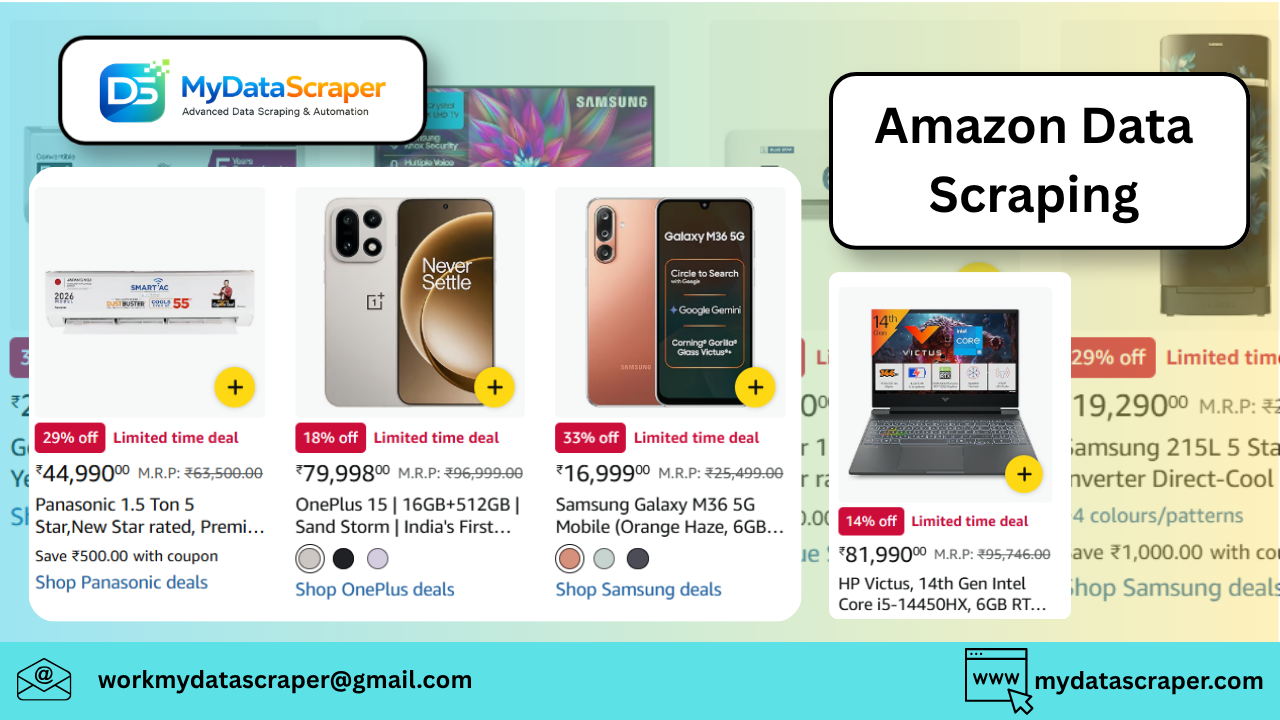
In today’s data-driven eCommerce landscape, success is no longer based on instinct alone—it’s powered by insights. And when it comes to online marketplaces, few platforms offer as much actionable data as Amazon.
From dynamic pricing and product trends to customer sentiment and competitor strategies, Amazon holds a wealth of information that businesses can use to make smarter decisions. But accessing and utilizing this data effectively requires the right balance of technology, strategy, and compliance.
In this guide, we’ll take a professional yet practical look at Amazon data scraping, including the tools you can use, the role of APIs, and the legal considerations you should always keep in mind.
Why Amazon Data Matters
Let’s start with a simple observation.
Have you ever noticed how frequently prices change on Amazon? A product you checked in the morning might have a completely different price by evening. Discounts appear and disappear, stock levels fluctuate, and new competitors enter the market constantly.
For businesses, this isn’t just interesting—it’s critical.
By analyzing data from Amazon, companies can:
- Monitor competitor pricing strategies
- Track product performance and rankings
- Analyze customer reviews and feedback
- Identify emerging product trends
- Optimize their own listings and pricing
In short, Amazon data provides a real-time view of market dynamics.
What Data Can Be Extracted?
Amazon product pages contain multiple layers of valuable information.
Product Information
- Product titles and descriptions
- Brand and category
- Specifications and features
- Images
This forms the foundation for catalog building and product analysis.
Pricing Data
- Current selling price
- Original price (MRP)
- Discounts and deal pricing
Tracking pricing over time enables effective price monitoring and strategy optimization.
Reviews and Ratings
- Star ratings
- Review count
- Customer feedback
This data is essential for understanding customer satisfaction and identifying product strengths or weaknesses.
Seller Insights
- Seller names
- Ratings and credibility
- Fulfillment methods (e.g., fulfilled by Amazon or third-party sellers)
Availability and Rankings
- Stock status
- Best Seller Rank (BSR)
- Category rankings
These indicators help measure demand and product performance.
Tools for Amazon Data Scraping
Extracting data from Amazon requires choosing the right tools based on your technical capabilities and business needs.
No-Code Tools
These are ideal for beginners or small-scale projects.
They offer:
- Visual interfaces
- Quick setup
- Basic data extraction
However, they may lack scalability for large datasets.
Programming-Based Solutions
For more flexibility and control, many teams use programming tools such as:
- Python-based scraping frameworks
- HTML parsing libraries
- Automation tools for dynamic content
This approach is widely used for custom workflows and large-scale data extraction.
Browser Automation Tools
Modern websites rely heavily on JavaScript, and Amazon is no exception.
Tools that simulate real user interactions allow you to:
- Load dynamic content
- Navigate pages
- Extract hidden data
Proxy and Anti-Bot Solutions
Amazon employs advanced anti-scraping mechanisms.
To maintain consistent access, businesses often use:
- Rotating IP addresses
- Residential proxies
- Request throttling techniques
Amazon APIs: A Structured Alternative
Instead of scraping, Amazon provides an official method to access data through its API.
Amazon Product Advertising API
Offered by Amazon, this API allows developers to retrieve structured product data.
Key features:
- Product details
- Pricing information
- Images and metadata
Limitations to Consider
While APIs are reliable, they come with constraints:
- Restricted access and approval requirements
- Limited data availability compared to scraping
- Usage policies that must be followed
When to Use APIs vs Scraping
| Scenario | Recommended Approach |
|---|---|
| Affiliate marketing | API |
| Large-scale market analysis | Scraping |
| Real-time price tracking | Scraping |
| Basic product data | API |
Understanding Amazon’s Anti-Scraping Measures
Amazon invests heavily in protecting its platform.
Common Detection Techniques
- Monitoring IP behavior and request frequency
- Browser fingerprinting
- CAPTCHA challenges
- Behavioral pattern analysis
Potential Consequences
If scraping is not handled carefully, you may encounter:
- Temporary or permanent IP bans
- CAPTCHA loops
- Data access restrictions
Best Practices for Responsible Scraping
To ensure efficiency and minimize risk, it’s important to follow best practices.
Use Rotating Proxies
Distribute requests across multiple IP addresses to avoid detection.
Mimic Human Behavior
- Add delays between requests
- Avoid rapid, repetitive actions
Use Realistic Headers
Ensure your requests resemble genuine browser traffic.
Monitor and Adapt
- Track scraping performance
- Detect failures early
- Adjust strategies as needed
Legal and Ethical Considerations
This is one of the most important aspects of Amazon data scraping.
Terms of Service
Amazon explicitly restricts unauthorized scraping in its terms of use.
Violating these terms may lead to:
- Account suspension
- Legal action
Public Data vs Restricted Data
Accessing publicly available information is generally less sensitive than attempting to extract private or protected data.
Ethical Guidelines
- Avoid excessive server load
- Respect platform rules
- Do not collect personal or sensitive information
- Ensure compliance with local laws and regulations
Real-World Applications
Amazon data scraping is widely used across industries.
Price Monitoring
Businesses track competitor pricing and adjust their strategies in real time.
Sentiment Analysis
Customer reviews are analyzed to understand preferences and improve products.
Product Research
Companies identify trending items and market gaps.
Competitive Intelligence
Brands monitor competitor listings, promotions, and performance.
Challenges to Expect
Even with the right tools, scraping Amazon comes with challenges:
- Frequent changes in website structure
- Dynamic content loading
- Large volumes of data
- Advanced anti-bot systems
Overcoming these requires continuous optimization and technical expertise.
The Future of Amazon Data Extraction
As technology evolves, so will both scraping methods and anti-bot systems.
We are already seeing trends such as:
- AI-powered data extraction
- Real-time analytics pipelines
- Advanced automation frameworks
- Smarter compliance-focused scraping solutions
Businesses that adapt to these changes will be better positioned to leverage Amazon data effectively.
Final Thoughts
Amazon is not just an online marketplace—it’s a dynamic ecosystem of data.
When approached strategically, Amazon data scraping can unlock valuable insights into pricing, customer behavior, and market trends.
However, success depends on maintaining the right balance between:
- Technical capability
- Responsible data usage
- Legal compliance
With the right approach, businesses can transform raw data into meaningful, actionable intelligence.
Let’s Continue the Conversation
Have you ever tracked product prices or read reviews extensively before making a purchase on Amazon?
What factors influence your buying decisions the most?
Share your thoughts—we’d love to hear your perspective.
Need Help with Amazon Data Scraping?
If you’re looking to build a reliable, scalable, and compliant Amazon data extraction solution, we’re here to help.
👉 Visit our contact page:
https://www.mydatascraper.com/contact-us/
Let’s turn Amazon data into insights that drive real business growth 🚀