There was a time when two-day shipping felt revolutionary.
Then same-day delivery became the benchmark.
Now?
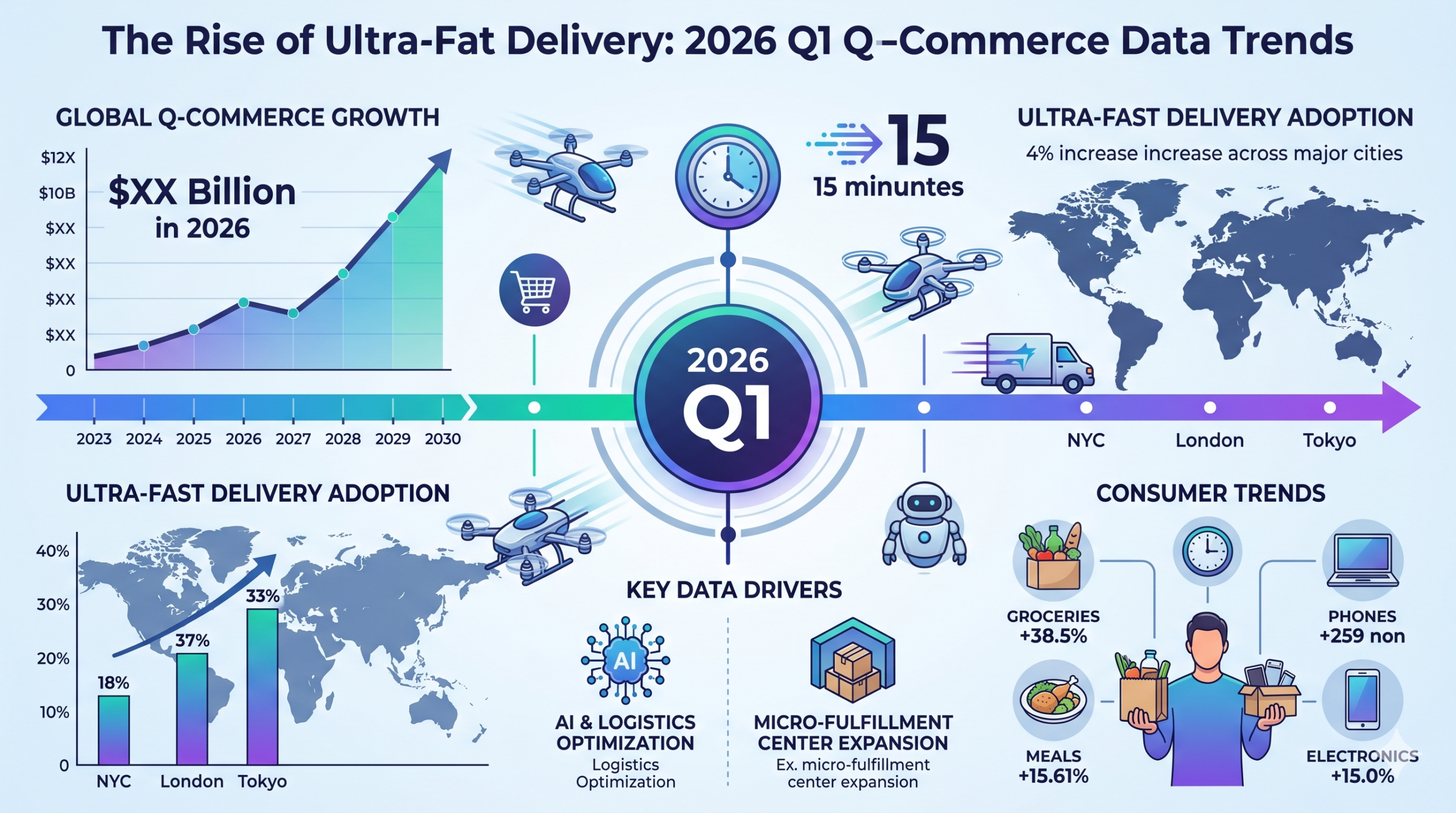
People expect groceries, snacks, medicines, and even electronics at their doorstep in under 15 minutes.
Welcome to the era of ultra-fast delivery, where speed is no longer a premium feature—it’s becoming the default expectation.
And if Q1 2026 data tells us anything, it’s this:
👉 Q-commerce is no longer “emerging.”
👉 It’s reshaping retail infrastructure itself.
From pricing wars to dark store expansion, from hyperlocal inventory optimization to AI-driven delivery routing, the quick commerce industry has entered a new phase of competition.
In this detailed report, we’ll break down:
- The biggest Q-commerce trends observed in Q1 2026
- What real-time data reveals about consumer behavior
- How ultra-fast delivery is impacting pricing and margins
- Why hyperlocal intelligence is becoming critical
- And how businesses can use data to stay competitive
The Evolution of Q-Commerce: From Convenience to Infrastructure
A few years ago, quick commerce was often viewed as a temporary convenience trend.
Something people used occasionally.
Today, that perception has completely changed.
Platforms like:
- Blinkit
- Zepto
- Instacart
- DoorDash
have transformed customer expectations around retail speed.
Consumers now expect:
- Instant inventory visibility
- Dynamic pricing
- Real-time stock updates
- Delivery within minutes—not hours
And businesses are redesigning supply chains around these expectations.
Q1 2026 Data Overview: What We Observed
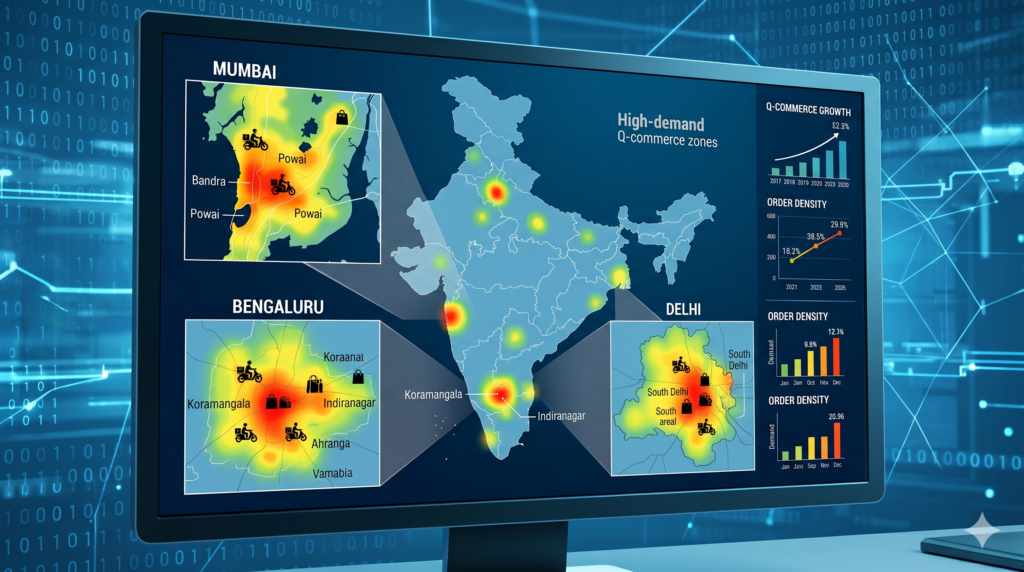
After analyzing Q-commerce pricing, inventory, and fulfillment patterns across major grocery and delivery platforms, several major themes emerged.
1. Delivery Speed Became a Competitive Weapon
This is perhaps the clearest shift.
In 2025:
👉 Delivery speed was a feature.
In 2026:
👉 Delivery speed became a pricing and retention strategy.
Key Observation
Platforms delivering in:
- 10–15 minutes
showed: - Higher repeat purchases
- Increased basket frequency
- Better retention rates
Even when prices were slightly higher.
Why?
Because convenience has become deeply psychological.
Customers are increasingly valuing:
- Immediate fulfillment
- Reduced planning effort
- Frictionless shopping
over small pricing differences.
2. Hyperlocal Pricing Is Expanding Rapidly
One of the most important insights from Q1 2026 data:
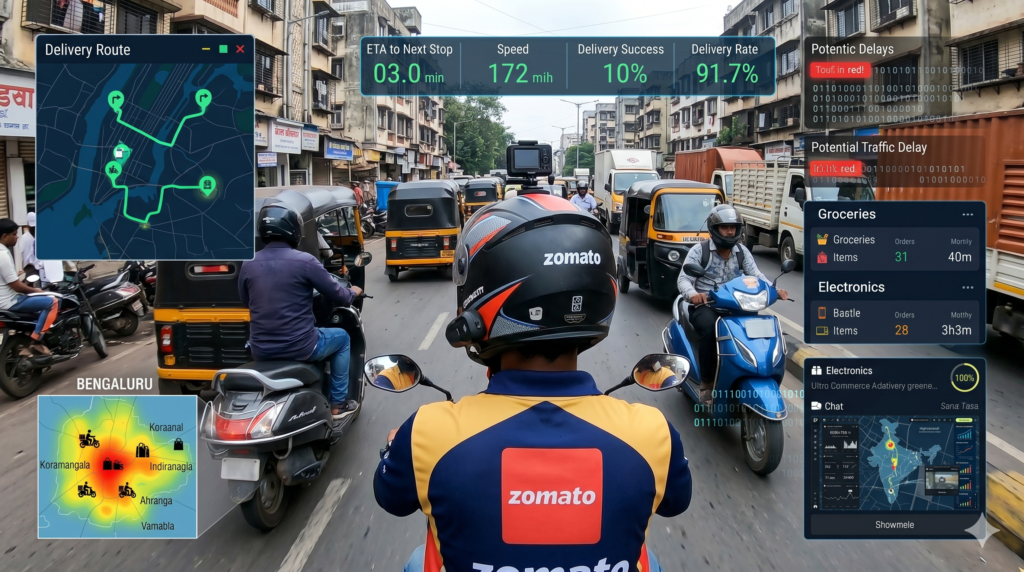
👉 Prices are no longer universal.
The same product may have:
- Different prices
- Different promotions
- Different availability
based on:
- ZIP code
- Neighborhood
- Dark store proximity
Example
Milk in one area:
👉 $4.49
Same SKU elsewhere:
👉 $5.29
Why This Happens
Hyperlocal pricing is influenced by:
- Delivery density
- Demand spikes
- Inventory levels
- Local competition
The Bigger Shift
Q-commerce platforms are increasingly operating as:
👉 Micro-market ecosystems
rather than centralized retail systems.
Explore our guide on real-time grocery price indexing for deeper insights.
Suggested Image
Image Alt: Heatmap showing grocery pricing differences across multiple city ZIP codes
3. Dark Stores Continued Aggressive Expansion
If ultra-fast delivery is the engine of Q-commerce, dark stores are the fuel.
Q1 2026 data revealed:
- Increased dark store density in urban areas
- Smaller fulfillment radiuses
- Faster inventory turnover
What Is a Dark Store?
A dark store is essentially:
👉 A mini-warehouse optimized for delivery instead of walk-in customers.
Why It Matters
Smaller delivery radiuses enable:
- Faster fulfillment
- Lower delivery times
- Better inventory precision
Observed Trend
Platforms are shifting toward:
👉 More dark stores with smaller coverage zones
instead of fewer large warehouses.
4. Real-Time Inventory Visibility Became Critical
One of the biggest operational challenges in Q-commerce is inventory accuracy.
Customers expect:
- What they see
to match: - What’s actually available
And Q1 data showed that inventory synchronization is improving—but still imperfect.
Common Patterns Observed
- Fast-moving SKUs disappearing during peak hours
- Flash restocking behavior
- Temporary out-of-stock spikes during promotions
Why This Matters
Inventory inconsistency directly affects:
- Customer trust
- Order completion rates
- Retention
5. Dynamic Pricing Became More Aggressive
Q-commerce pricing is becoming increasingly algorithmic.
During Q1 2026, we observed:
- Frequent intraday price changes
- Demand-sensitive pricing adjustments
- Platform-specific promotions
Example Patterns
Products showed:
- Higher prices during evening rush hours
- Temporary discounts during low-demand periods
What’s Driving This?
Platforms are optimizing for:
- Margin preservation
- Delivery efficiency
- Inventory movement
6. Basket Sizes Are Changing
Another interesting insight:
👉 Customers are ordering smaller baskets—but more frequently.
Instead of weekly grocery hauls, users increasingly place:
- Multiple small orders per week
Why?
Ultra-fast delivery reduces the need for bulk planning.
Consumers now buy:
- Based on immediate need
rather than: - Weekly forecasting
Business Impact
This changes:
- Inventory management
- Packaging strategies
- Pricing models
7. Promotions Are Becoming Hyper-Personalized
Mass promotions are losing efficiency.
Q1 data suggests platforms are increasingly relying on:
- User-specific discounts
- Location-based promotions
- Behavior-driven recommendations
Example
Two users in the same city may see:
- Different discounts
- Different delivery fees
- Different product suggestions
Why?
Because personalization increases:
- Conversion
- Retention
- Average order value
8. Delivery Efficiency Became More Important Than Pure Speed
This is subtle—but important.
Consumers want fast delivery.
But businesses need:
👉 Sustainable economics.
Q1 data showed platforms focusing more on:
- Route optimization
- Delivery batching
- Predictive inventory positioning
The Shift
The industry is moving from:
👉 “Fastest possible”
to:
👉 “Fastest sustainable”
What This Means for Retailers & Brands
If you’re operating in retail, grocery, FMCG, or logistics, these trends matter deeply.
Because Q-commerce is changing:
- Consumer expectations
- Pricing models
- Supply chain architecture
- Competitive dynamics
Why Real-Time Data Is Now Essential
In traditional retail:
- Weekly reports worked.
In Q-commerce:
- Hourly intelligence matters.
Businesses now need visibility into:
- Pricing changes
- Stock availability
- Promotion patterns
- Delivery efficiency
in near real time.
The Data Infrastructure Behind Q-Commerce
Most consumers only see the app interface.
But underneath, Q-commerce relies on:
- Real-time data pipelines
- Hyperlocal demand forecasting
- Inventory synchronization systems
- Dynamic pricing engines
The Reality
Without data infrastructure:
👉 Ultra-fast delivery doesn’t scale.
How MyDataScraper Can Help
Tracking Q-commerce trends manually is nearly impossible.
Prices shift constantly.
Inventory changes rapidly.
Promotions vary by location.
That’s where MyDataScraper helps businesses build real competitive intelligence.
What MyDataScraper Provides
- Real-time grocery pricing extraction
- Hyperlocal product availability tracking
- Multi-platform Q-commerce monitoring
- Delivery and inventory intelligence
- Structured datasets for analytics and forecasting
Business Advantages
With reliable Q-commerce data, businesses can:
- Monitor competitors in real time
- Optimize pricing strategies
- Track regional demand patterns
- Improve inventory planning
The Future of Ultra-Fast Delivery
Looking ahead, several trends are becoming clear.
AI-Driven Fulfillment
AI will increasingly optimize:
- Inventory placement
- Route planning
- Delivery batching
Predictive Grocery Availability
Platforms will anticipate demand before orders are placed.
Autonomous Delivery Expansion
We’ll likely see:
- Delivery robots
- Drone pilots
- Automated micro-fulfillment systems
Hyperlocal Personalization
Pricing, promotions, and recommendations will become:
👉 Neighborhood-specific
👉 User-specific
👉 Time-specific
Final Thoughts
Q-commerce is no longer a side category of eCommerce.
It’s becoming:
👉 A real-time retail operating system.
And Q1 2026 data makes one thing clear:
The future belongs to businesses that can:
- Collect data faster
- Analyze it smarter
- Adapt in real time
Because in ultra-fast delivery:
👉 Speed isn’t just logistics.
It’s intelligence.
Let’s Continue the Conversation
How has ultra-fast delivery changed your shopping habits?
- Do you rely on quick commerce regularly?
- Have you noticed pricing differences between apps?
- Would you pay more for faster delivery?
Your answers reflect exactly the trends shaping the future of retail.
Want Real-Time Q-Commerce Intelligence?
If you’re looking to monitor grocery pricing, delivery trends, hyperlocal inventory, or competitor activity across Q-commerce platforms:
👉 Visit: https://www.mydatascraper.com/contact-us/
Let’s build a real-time competitive intelligence system for your business 🚀