Booking.com vs Airbnb for Price Forecasting: Which Platform Provides Cleaner Data?
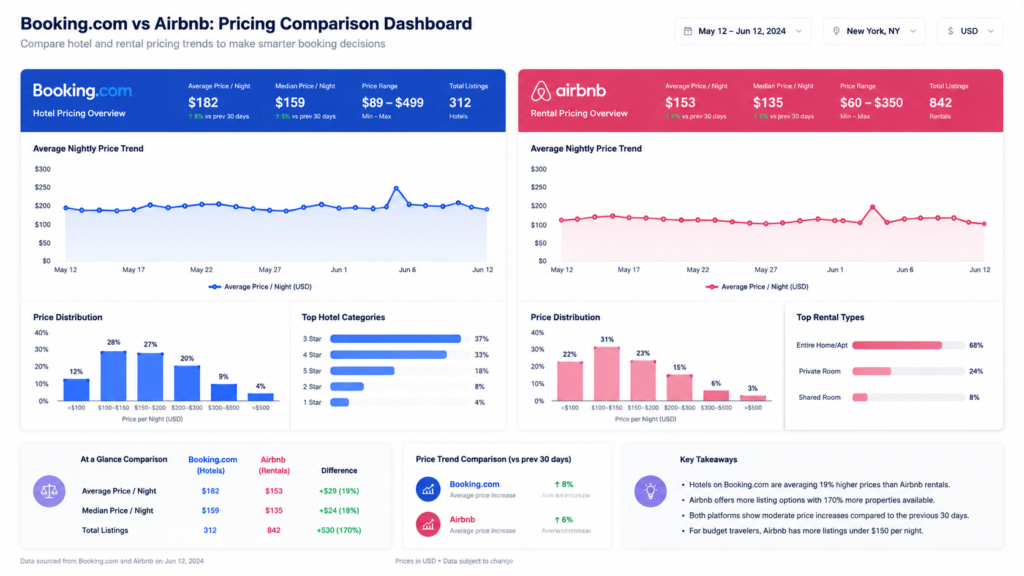
Travel pricing has become one of the most dynamic data ecosystems on the internet. Open a hotel listing today, and by tomorrow: For travel businesses, analysts, investors, and pricing intelligence teams, this creates one critical challenge: 👉 Which platform provides cleaner, more reliable data for forecasting future prices? And when discussing travel pricing data, two […]
Headless Browser Scraping with Playwright and Python: Step-by-Step Guide (2026)
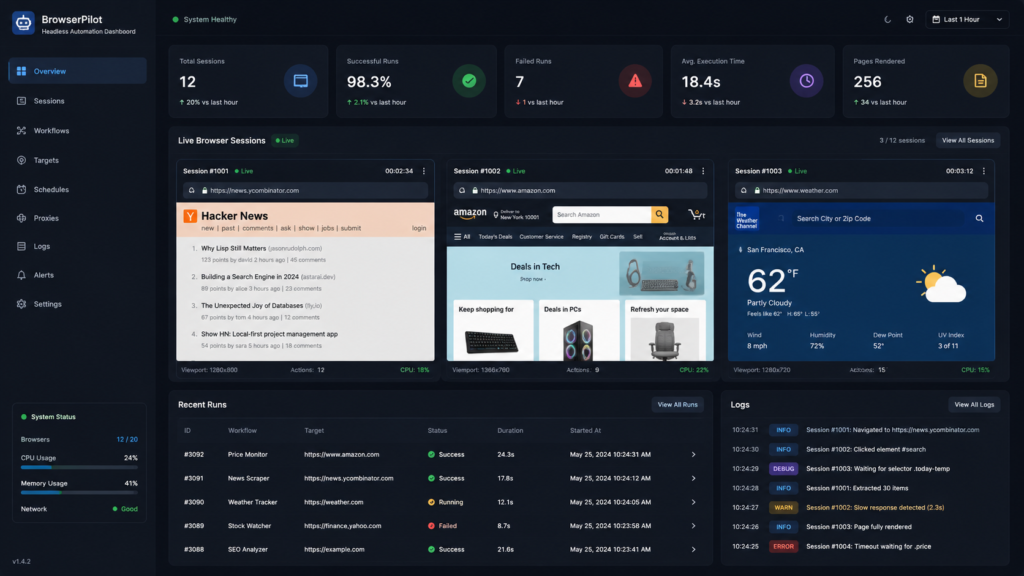
Modern websites are no longer simple HTML pages. Open almost any eCommerce store, travel platform, grocery app, or social media website today, and you’ll notice something immediately: 👉 Content loads dynamically.👉 Buttons trigger JavaScript events.👉 Infinite scrolling replaces pagination.👉 APIs hide behind browser interactions. For traditional scrapers, this creates a serious challenge. A simple HTTP […]
The Rise of Ultra-Fast Delivery in 2026: Q1 Q-Commerce Data Trends & Market Insights
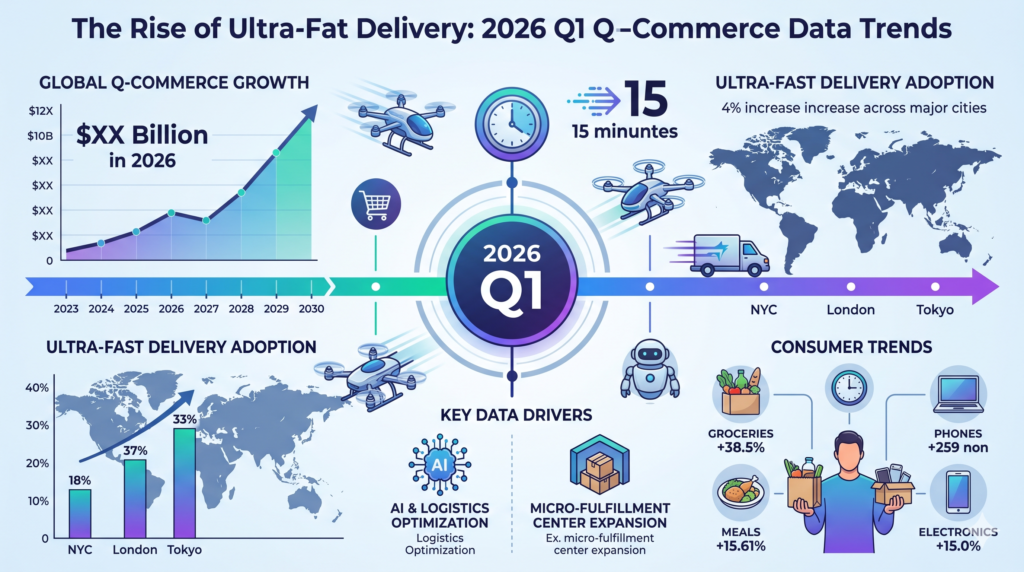
There was a time when two-day shipping felt revolutionary. Then same-day delivery became the benchmark. Now? People expect groceries, snacks, medicines, and even electronics at their doorstep in under 15 minutes. Welcome to the era of ultra-fast delivery, where speed is no longer a premium feature—it’s becoming the default expectation. And if Q1 2026 data […]
Data Digest #1: AI Regulation, Travel API Changes & eCommerce Scraping News
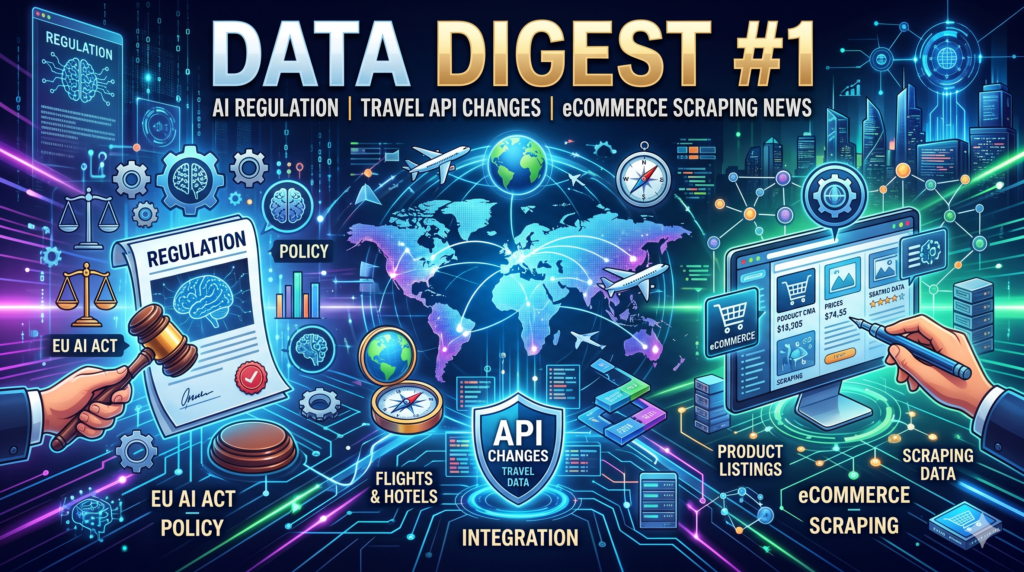
Published on May 4, 2026 | MyDataScraper Welcome to the very first edition of the MyDataScraper Data Digest, our monthly roundup of the developments that are reshaping how we collect, use, and think about public web data. May 2026 has been nothing short of seismic: the EU AI Act is finally in full swing, travel […]
How a PropTech Startup Reduced Time‑to‑Appraisal by 60% with Our MLS Scraping API
In the fast-moving world of property technology, speed is everything. A single hour shaved off an appraisal process can mean millions in additional lending volume. So when Valocity Labs, an AI‑driven proptech startup, came to us with a familiar problem — tedious, manual MLS data gathering that was slowing down their entire underwriting pipeline — […]
Fresh & Fast: Introducing Our New US Grocery Delivery Menu & Pricing Dataset
Imagine having the ability to see exactly what millions of American shoppers see when they open their grocery delivery apps — every product, every price, every promotion, every day. That’s no longer a futuristic vision. We’ve just launched our most ambitious dataset yet: the US Grocery Delivery Menu & Pricing Dataset. It gives you a […]
Building a Real‑Time Grocery Price Index to Win in Q‑Commerce Competitive Intelligence
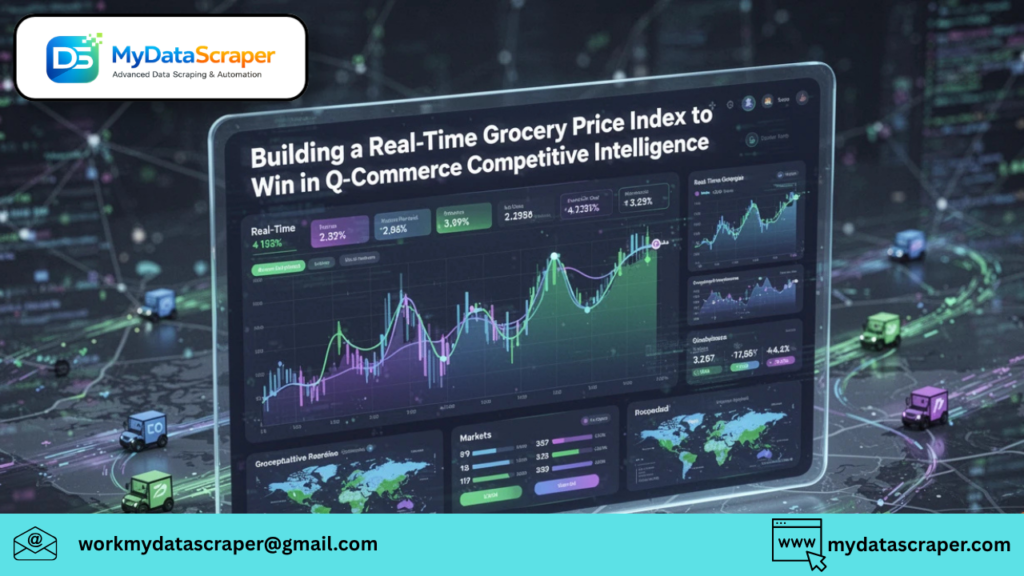
Walk into any quick commerce app today and you’ll notice something fascinating: 👉 The price of milk at 9 AM isn’t always the same at 9 PM. That’s not a bug—it’s strategy. Welcome to the world of real-time grocery pricing, where platforms constantly adjust prices based on demand, inventory, location, and competition. For businesses operating […]
Airbnb vs. Booking.com for Business Travel: Which Platform’s Data Delivers Better Corporate Rates?
If you’ve ever tried booking accommodation for a business trip, you’ve probably noticed something frustrating: 👉 The same city, same dates… wildly different prices across platforms. And when you compare Airbnb and Booking.com, the differences aren’t just about price—they’re about how pricing is structured, how data is presented, and how predictable those costs really are. […]
High‑Speed Scraping with Python: Harnessing httpx and asyncio for Concurrent Data Extraction
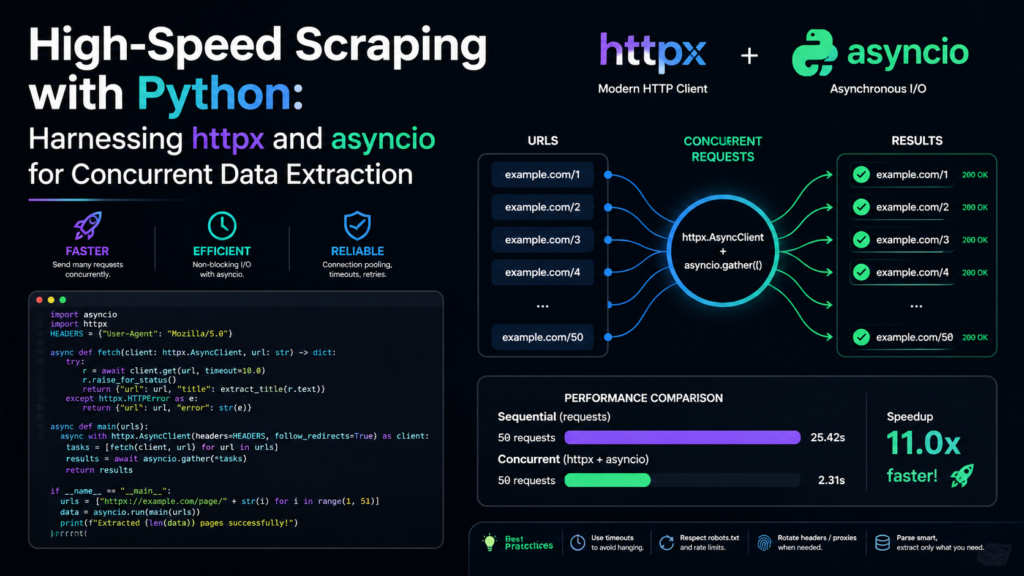
If you’ve ever run a scraper that worked perfectly… but took hours to finish, you’ve already hit the wall most data teams eventually face: 👉 Speed becomes the bottleneck. At small scale, sequential scraping works fine. But as soon as you need to extract thousands—or millions—of pages, things change. Latency adds up. Requests pile up. […]
Data Digest: Google’s April Core Update, New Travel API Restrictions & Web Scraping Compliance News
If you work with data—whether in SEO, travel tech, or web scraping—you’ve probably felt it lately: 👉 Things are shifting. Fast. Search rankings are volatile. APIs are getting tighter. And compliance is no longer optional—it’s becoming a core business requirement. In this month’s data digest, we break down three major developments shaping the data ecosystem […]