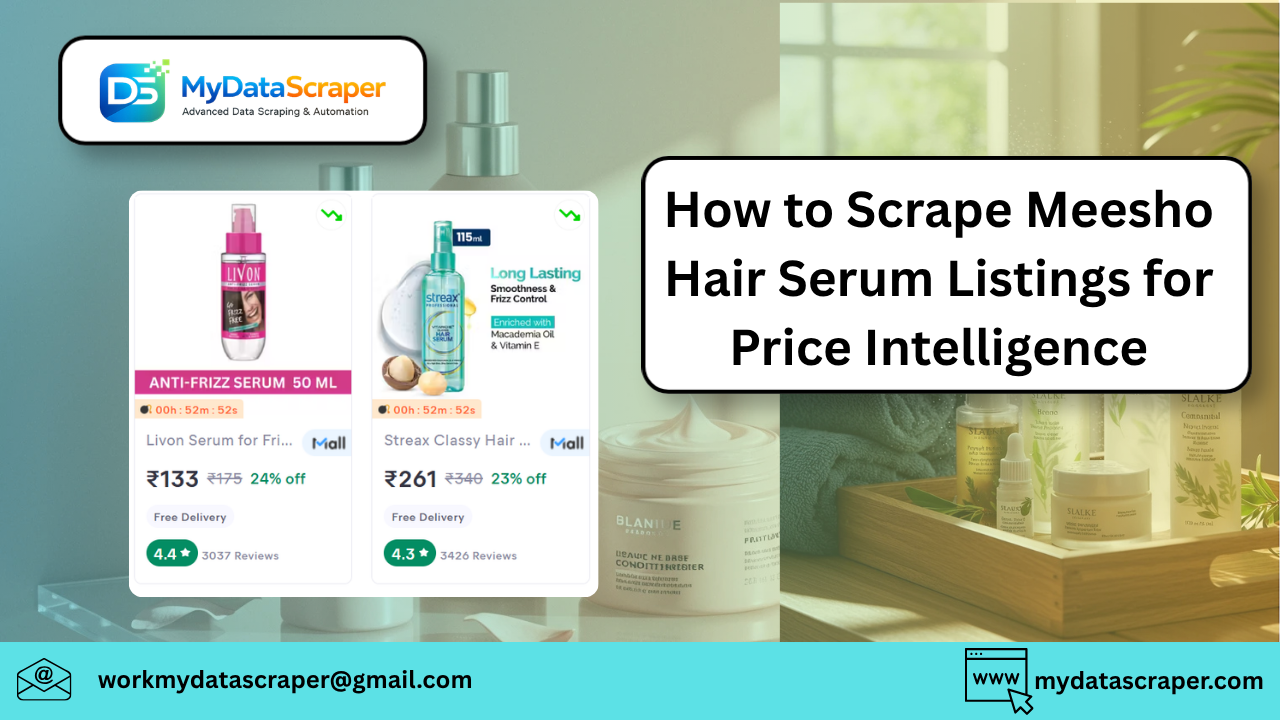
If you’ve ever searched for “hair serum” online, you’ve probably noticed something interesting—dozens of listings, wildly different prices, and countless brands competing for attention.
A while back, I was helping someone analyze beauty product trends, and we stumbled upon something surprising. The same type of hair serum—argan oil-based—was priced anywhere between ₹120 and ₹499 across different listings.
That’s when it became clear: marketplaces like Meesho are goldmines of product data.
If you’re looking to extract Meesho hair serum listings, this guide will walk you through exactly how to do it—what data to collect, how scraping works, and how to turn that data into insights.
Why Scrape Meesho Hair Serum Listings?
Meesho is one of India’s fastest-growing social commerce platforms, especially popular for:
- Beauty products
- Fashion items
- Affordable consumer goods
Hair serum is a highly competitive category on Meesho, making it ideal for:
- Price monitoring
- Competitor analysis
- Product research
- Trend identification
What Data Can You Extract?
Before scraping, you need to define your dataset.
For hair serum listings, you’ll typically collect:
Product-Level Data
- Product title
- Brand name
- Product description
- Category
Pricing Data
- Selling price
- Original price (if available)
- Discount percentage
Ratings & Reviews
- Average rating
- Number of reviews
- Customer feedback
Seller Information
- Seller name
- Seller rating
Availability & Variants
- In-stock / out-of-stock
- Pack size (e.g., 50ml, 100ml)
- Variants (herbal, argan oil, onion oil, etc.)
Step-by-Step: How to Scrape Meesho Hair Serum Listings
Let’s break this into a practical workflow.
Step 1: Identify Target URL
Start with the hair serum category or search page on Meesho.
Example:
- Search query: “hair serum”
- Category page: Beauty → Hair Care
This page contains multiple product listings.
Step 2: Inspect Page Structure
Use browser developer tools to inspect:
- Product containers
- Title selectors
- Price elements
- Rating elements
Look for patterns in:
- HTML tags
- Class names
- Data attributes
Step 3: Handle Pagination or Infinite Scroll
Meesho often uses:
- Infinite scrolling
- Lazy loading
Your scraper must:
- Scroll dynamically
- Load additional products
- Capture all listings
Step 4: Extract Product Data
For each listing, extract:
- Title
- Price
- Rating
- Product URL
Then visit individual product pages to collect:
- Description
- Reviews
- Seller details
Step 5: Clean and Structure Data
Raw data needs cleaning:
- Remove duplicates
- Normalize prices
- Standardize units (ml, grams)
Store data in:
- CSV
- Excel
- Database
Tools You Can Use
Depending on your technical level, you can choose:
Beginner Tools
- No-code scraping tools
- Browser extensions
Intermediate Tools
- Python (BeautifulSoup, Selenium)
- Puppeteer
Advanced Setup
- Headless browsers
- Proxy rotation
- Anti-bot handling
Challenges in Scraping Meesho
Scraping Meesho isn’t always straightforward.
1. Dynamic Content
Listings load dynamically, so static scraping won’t work.
2. Anti-Bot Systems
You may face:
- Rate limits
- Temporary blocks
- CAPTCHA
3. Frequent Data Changes
Prices and availability change often.
You need regular data collection.
4. Product Duplication
Same product may appear under different sellers.
You’ll need to standardize data.
Real-World Use Case
Let’s say you’re launching your own hair serum brand.
By scraping Meesho listings, you might discover:
- Most products fall in ₹150–₹300 range
- Argan oil and onion-based serums dominate
- 100ml packs are most common
- High-rated products emphasize “non-sticky” formulas
With this insight, you can:
- Price competitively
- Position your product better
- Highlight key features customers care about
Turning Data into Insights
Once your dataset is ready, you can analyze:
Price Distribution
- Identify average price range
- Detect premium vs budget segments
Top Brands
- Find frequently listed brands
- Analyze their pricing strategy
Customer Preferences
From reviews, extract:
- Popular ingredients
- Common complaints
- Desired features
Demand Signals
- Frequently reviewed products
- High-rating + high-review count
These indicate strong demand.
Best Practices
To get reliable data:
Scrape Responsibly
- Limit request frequency
- Avoid overloading servers
Use Proxies
Helps prevent IP blocking.
Automate Regular Updates
Daily or weekly scraping ensures fresh data.
Normalize Data
Standardize:
- Price formats
- Units
- Product categories
The Future of Beauty Product Data
Beauty and personal care is one of the fastest-growing eCommerce categories.
Platforms like Meesho generate massive datasets daily.
In the future, we’ll see:
- AI-driven product insights
- Real-time pricing analytics
- Personalized beauty recommendations
Businesses that leverage data early will have a major advantage.
Final Thoughts
Scraping Meesho hair serum listings isn’t just about collecting product data—it’s about understanding the market.
From pricing trends to customer preferences, every listing tells a story.
And when you analyze that data at scale, you gain insights that can shape smarter business decisions.
Let’s Talk
Have you ever compared multiple hair serum products before buying?
What factors mattered most—price, ingredients, or reviews?
Drop your thoughts in the comments 👇
Need Help Scraping Meesho Data?
If you want to extract Meesho product listings, track pricing trends, or build a beauty product dataset, we can help.
👉 Visit our contact page:
https://www.mydatascraper.com/contact-us/
Let’s turn marketplace data into actionable insights 🚀