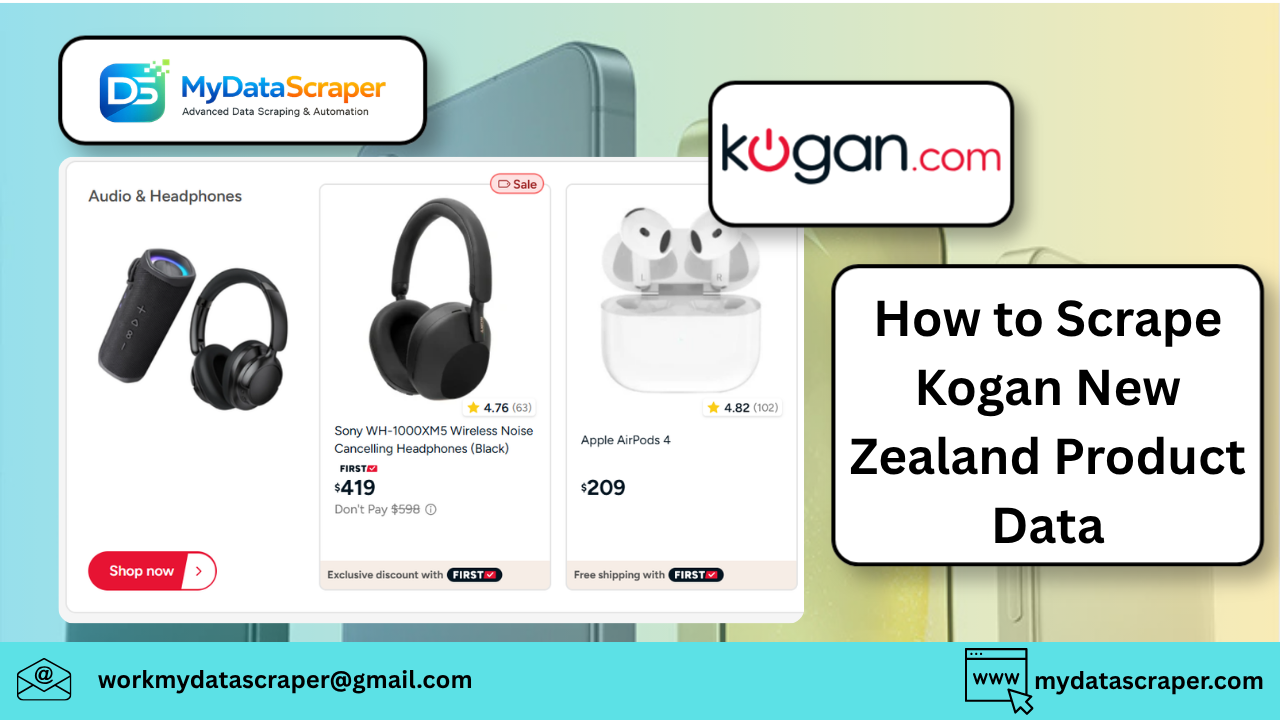
If you’ve ever browsed an online electronics store and wondered how prices, discounts, and product availability seem to shift almost in real time—you’re not imagining it.
Modern eCommerce platforms are highly dynamic, and retailers like Kogan New Zealand are no exception. From flash sales to bundle offers, every change reflects deeper patterns in demand, competition, and inventory.
For businesses, extracting this data isn’t just a technical exercise—it’s a strategic advantage.
In this guide, we’ll walk through how to scrape Kogan New Zealand product data, what you can extract, and how to turn that data into meaningful insights.
Why Kogan New Zealand Data Matters
Kogan New Zealand is a major player in the online retail space, offering products across:
- Electronics
- Home appliances
- Accessories
- Lifestyle products
What makes Kogan particularly interesting is its:
- Competitive pricing strategy
- Frequent promotions and bundles
- Wide product catalog
This makes it an excellent source for:
- Price monitoring
- Product trend analysis
- Competitor benchmarking
A Quick Real-World Insight
A team analyzing electronics pricing once tracked a few products on Kogan New Zealand over two weeks.
They noticed:
- Prices changed more frequently during weekends
- Bundle offers increased conversion potential
- Certain SKUs went out of stock faster after discounts
That insight helped them refine their own pricing and promotion strategy.
What Data Can You Extract?
To build a meaningful dataset, focus on key product-level signals.
Product Information
- Product name
- Category
- Brand
- Description
- Specifications
Pricing Data
- Current price
- Original price
- Discount percentage
Availability Data
- In-stock / out-of-stock status
- Variant availability
Product Variants
- Size, color, configuration
- SKU-level details
Ratings & Reviews (if available)
- Customer ratings
- Review count
- Feedback
Promotions & Bundles
- Combo deals
- Limited-time offers
- Discount tags
Methods to Scrape Kogan Product Data
Extracting data from Kogan New Zealand requires a structured approach.
1. HTML-Based Scraping
This is the most straightforward method.
You extract data directly from the page structure.
Best for:
- Product listings
- Basic product details
2. API-Based Extraction
Many modern eCommerce sites use APIs to load product data.
By inspecting network requests, you can:
- Identify product APIs
- Extract structured JSON data
- Improve scraping efficiency
3. Browser Automation
For dynamic elements like:
- Lazy loading
- Variant selection
- Interactive pricing
Browser automation tools simulate real user behavior.
4. Pagination Handling
Kogan product listings often span multiple pages.
You’ll need to:
- Iterate through pages
- Capture all listings
- Avoid duplication
Step-by-Step Scraping Workflow
Step 1: Identify Target Pages
Start with:
- Category pages
- Search results
- Product listings
Step 2: Inspect Page Structure
Use developer tools to locate:
- Product containers
- Price elements
- Titles and links
Step 3: Extract Listing Data
From listing pages, collect:
- Product name
- Price
- Product URL
Step 4: Scrape Product Detail Pages
Visit each product page to extract:
- Full description
- Specifications
- Variants
- Availability
Step 5: Clean and Structure Data
Normalize your dataset:
- Standardize price formats
- Remove duplicates
- Align product categories
Step 6: Automate Data Collection
Set up scheduled scraping to track:
- Price changes
- Inventory updates
- New product listings
Key Challenges to Expect
Dynamic Content
Some data loads via JavaScript, requiring rendering.
Anti-Bot Protection
You may encounter:
- Rate limiting
- IP blocking
Frequent Price Changes
Requires regular updates to maintain accuracy.
Product Variations
Handling multiple variants per product adds complexity.
Real-World Use Cases
1. Price Monitoring
Track pricing trends and competitor strategies.
2. Product Trend Analysis
Identify:
- High-demand products
- Fast-moving categories
3. Inventory Tracking
Monitor stock levels and availability patterns.
4. Competitive Benchmarking
Compare your product offerings with market leaders.
A Practical Scenario
Let’s say you’re an electronics retailer entering the New Zealand market.
By analyzing data from Kogan New Zealand, you might discover:
- Mid-range electronics dominate sales
- Discounts significantly impact demand
- Bundled offers increase average order value
With this insight, you can:
- Price products competitively
- Create better bundles
- Optimize inventory planning
Best Practices for Reliable Scraping
Respect Request Limits
Avoid overwhelming the website with rapid requests.
Use Structured Data Sources
Prefer API-based extraction when available.
Normalize Data
Ensure consistency across datasets.
Monitor Changes
Regularly check for site structure updates.
How MyDataScraper Can Help
Scraping eCommerce platforms like Kogan New Zealand may seem manageable at first—but scaling it reliably is where most teams face challenges.
- Website structures change
- Anti-bot systems block access
- Data pipelines require constant maintenance
- Multi-page and variant scraping becomes complex
This is where MyDataScraper adds real value.
What You Get
- Custom-built scraping solutions tailored to Kogan data
- Multi-page and variant-level data extraction
- Clean, structured datasets ready for analysis
- Handling of anti-bot mechanisms and dynamic content
- Scalable pipelines with ongoing support
The Business Advantage
Instead of spending time fixing scrapers, your team can focus on:
- Analyzing data
- Making strategic decisions
- Growing your business
👉 In simple terms, you get reliable data without operational complexity.
The Future of eCommerce Data Extraction
As online retail evolves, data extraction will become even more critical.
We’re moving toward:
- Real-time price intelligence
- AI-driven demand forecasting
- Automated competitor tracking
- Hyperlocal market insights
Platforms like Kogan New Zealand will continue to be key data sources.
Final Thoughts
Scraping Kogan New Zealand product data isn’t just about collecting listings—it’s about understanding the market behind the listings.
Every price change, every discount, every stock update reflects a deeper trend.
And when you connect those signals, you gain insights that drive smarter, faster decisions.
Let’s Continue the Conversation
When you shop online, what influences your decision the most?
- Price?
- Discounts?
- Reviews?
- Brand trust?
Your answer is exactly the kind of insight businesses aim to capture.
Need Help Extracting Kogan Product Data?
If you’re looking to build a scalable and reliable system for extracting Kogan product data:
👉 Visit: https://www.mydatascraper.com/contact-us/
Let’s turn eCommerce data into actionable intelligence 🚀