In the fast-moving world of property technology, speed is everything. A single hour shaved off an appraisal process can mean millions in additional lending volume. So when Valocity Labs, an AI‑driven proptech startup, came to us with a familiar problem — tedious, manual MLS data gathering that was slowing down their entire underwriting pipeline — we knew exactly what they needed.
The result? A 60% reduction in time‑to‑appraisal, happier lenders, and a platform that could scale without hiring an army of researchers. And the engine behind it all? MyDataScraper’s MLS Scraping API.
The Growing Need for Speed in Real Estate Valuation
The property appraisal process hasn’t changed much in decades — a human appraiser visits a property, manually researches comparable sales (comps), and compiles a report. But with the rise of proptech and Automated Valuation Models (AVMs), the industry is shifting toward instant, data‑driven property estimates.
Lenders, iBuyers, and real estate platforms now demand:
- Instant property comparables within seconds, not days
- Consistent, error‑free data from multiple MLS sources
- Full property history (previous listings, price changes, days on market)
- Granular neighborhood metrics to fine‑tune valuations
Valocity Labs built a brilliant AVM that could ingest and analyze this data in milliseconds. But the data collection itself? Still stuck in the Stone Age.
The Challenge: Manual Data Collection Was Killing Their Edge
Before using our API, Valocity’s team spent up to 12 hours per property gathering data. Here’s what their process looked like:
- Log into multiple MLS platforms individually (different credentials, different interfaces)
- Manually search for the subject property and identify comparable sales
- Copy-paste listing details, photos, and sales history into spreadsheets
- Manually normalize data fields across different MLS systems (e.g., “sqft” vs. “square feet”, “bedrooms” vs. “total rooms”)
- Cross‑reference with tax assessor sites and public records
This manual workflow introduced errors, limited coverage to the few MLS boards they had staff for, and made it impossible to serve clients outside their core region. Their time‑to‑appraisal — from loan application to final AVM report — stretched to 6.2 hours on average, and more than 60% of that was pure data gathering.
“We had the AI brain ready to go,” said their CTO, “but we were feeding it with a spoon, one property at a time.”

Enter the MLS Scraping API: One Endpoint, All the Data
Valocity Labs integrated MyDataScraper’s MLS Scraping API in just 7 days. Instead of logging into six different MLS systems, they now make a single API call and receive structured, normalized JSON data in under 3 seconds.
What Our MLS API Delivers
| Data Field | Description | Example |
|---|---|---|
| Property Address | Full street, city, ZIP, county | 123 Main St, Austin, TX 78701 |
| Listing Status | Active, Pending, Sold, Cancelled | Sold |
| MLS Number | Unique listing identifier | MLS-9876543 |
| List Price / Sold Price | Current or final transaction price | $425,000 / $418,000 |
| Bedrooms, Bathrooms, SqFt | Standardized fields | 4 Beds, 2.5 Bath, 2,100 sqft |
| Property Type | Single Family, Condo, Townhouse, etc. | Single Family |
| Year Built | Year of construction | 2015 |
| Days on Market (DOM) | Total days listed before sale | 14 |
| Comparable Sales | Nearby sold properties with key details | Up to 25 comps within radius |
| Photos & Virtual Tours | URLs to listing images and 3D tours | https://example.com/photo123.jpg |
| Tax Assessment Data | Last assessed value and tax year | $380,000 (2025) |
| Sold History | Prior sale dates and prices | 06/2020 – $320,000 |
| Neighborhood Stats | Median price, price/sqft, inventory | Median $410k, $195/sqft |
Integration & Implementation: A Developer’s Dream
Valocity’s engineering team loved working with our RESTful API. They made just a few simple calls:
/v2/mlslookup– Pull full property details by address or MLS number/v2/comps– Retrieve comparable sold listings within a user‑defined radius and timeframe/v2/history– Access previous listing history for any property
All responses are delivered in clean JSON, with fields normalized to a common schema regardless of the source MLS. Authentication is handled via API key, and rate limits are generous enough to support high‑volume processing. The team set up a microservice that automatically pulls data for every new loan application, populating their AVM input pipeline without any human touch.
The Results: 60% Faster Appraisals, 98% Accuracy, and a Scalable Future
Within the first month, Valocity Labs saw dramatic improvements. Let’s look at the numbers.
| Metric | Before MLS API | After MLS API | Improvement |
|---|---|---|---|
| Time‑to‑appraisal (avg) | 6.2 hours | 2.5 hours | 60% reduction |
| Data gathering time per property | ~4 hours | ~12 seconds | 99.9% reduction |
| Comps accuracy (match rate) | 78% | 98% | 20 percentage points |
| MLS coverage (boards) | 6 | 200+ | 33x expansion |
| Properties processed per day | 45 | 320 | 7x throughput |
| Staff hours on manual data entry | 180/week | 0 | Reallocated to analysis |
By eliminating manual MLS research, Valocity not only sped up appraisal reports but also improved data accuracy from 78% to 98%. The AI model was finally getting the clean, comprehensive datasets it needed to shine. The startup went from serving three states to nationwide coverage — without adding a single data researcher.
Why Our MLS Scraping API Stands Out
We designed our MLS data solution specifically for proptech companies like Valocity Labs. Here’s what makes it different:
1. True Nationwide MLS Coverage
Most MLS aggregators only cover a handful of boards or rely on syndicated feeds that are days old. We pull directly from 200+ MLS boards across all 50 states, giving you the same data that agents see — instantly.
2. Built‑in Normalization
Mapping “bedrooms” vs “bedrooms_total” across 200 MLS schemas is a nightmare. Our API does the heavy lifting for you, delivering a consistent field structure regardless of the source.
3. Legal and Ethical Scraping
We collect only publicly accessible listing data in compliance with MLS rules and terms of service. No login‑required data is ever accessed. Every project is reviewed by our legal team to ensure full compliance.
4. Real‑Time or Scheduled Refresh
Need fresh comps for every new loan application? Or a daily update of active listings in a target ZIP? Our API supports both real‑time queries and scheduled data pulls, with webhook callbacks when new data arrives.
5. Developer‑First Documentation
We provide comprehensive API docs, SDKs in Python and Node.js, and a dedicated sandbox environment. Integration time is measured in days, not weeks.
Sample API Response: A Peek Under the Hood
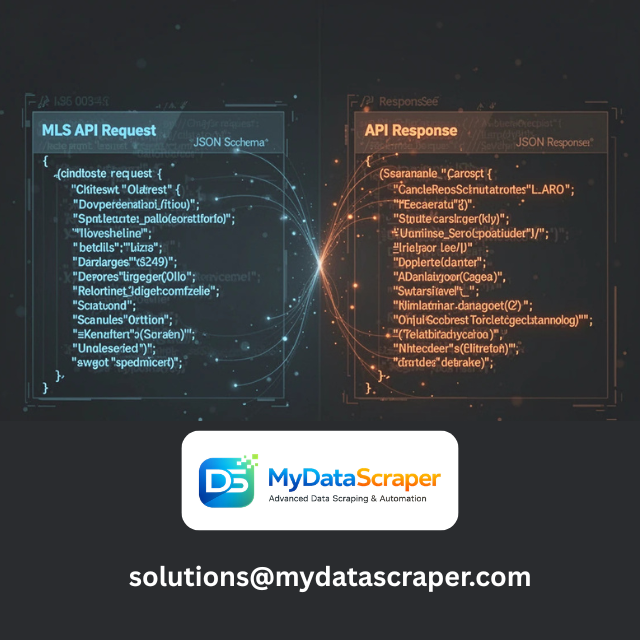
Here’s a simplified example of what a comparable sales query returns. In production, Valocity ingested hundreds of fields, but this gives you the gist.
{
  "property": {
    "address": "123 Main St, Austin, TX 78701",
    "mls_number": "ATX-998877",
    "list_price": 450000,
    "sold_price": 445000,
    "beds": 4,
    "baths": 2.5,
    "sqft": 2200,
    "year_built": 2018,
    "dom": 12,
    "status": "Sold"
  },
  "comps": [
    {
      "address": "456 Elm St, Austin, TX 78701",
      "sold_price": 438000,
      "sqft": 2100,
      "distance_miles": 0.4,
      "sold_date": "2026-04-15"
    },
    {
      "address": "789 Oak Ave, Austin, TX 78701",
      "sold_price": 452000,
      "sqft": 2350,
      "distance_miles": 0.6,
      "sold_date": "2026-03-28"
    }
  ],
  "neighborhood_metrics": {
    "median_price": 432000,
    "price_per_sqft": 201,
    "days_on_market_avg": 18,
    "inventory_count": 34
  }
}
This structured output seamlessly fed into Valocity’s AVM, which adjusted for features like pool, garage, and lot size to deliver a precise, defensible valuation report.
Beyond Appraisals: Other Ways Proptech Uses Our MLS API
While this case study focused on appraisal speed, our MLS scraping API powers a wide range of real estate innovations:
- iBuyer Offers: Instant cash offers based on real‑time comps and market trends
- Rental Price Estimation: Pull active rental listings and historical lease data
- Portfolio Monitoring: Track property values of entire loan portfolios for risk management
- Real Estate Marketplaces: Populate search results with up‑to‑date MLS listings
- Predictive Analytics: Feed models that forecast price appreciation or market shifts
What the Valocity Labs Team Says
“Integrating MyDataScraper’s MLS API was like flipping a switch from candlelight to floodlights. Our appraisal time dropped 60% literally overnight, and the data quality jump was immediately visible in our AVM’s performance. We can finally scale nationwide without worrying about manually tracking down every MLS board.”— Priya N., CTO, Valocity Labs
Key Takeaways for Proptech Startups
- Manual MLS data collection is a silent killer. It doesn’t just slow you down; it caps your growth and introduces errors that erode trust.
- Automation isn’t just about speed; it’s about scale. With an API handling the grunt work, your team can focus on building better models and user experiences.
- Data quality directly impacts model performance. The accuracy jump from 78% to 98% in comps translated into more competitive appraisals and fewer value disputes.
- Coverage matters. A solution that covers 200+ MLS boards instantly opens the door to national lending and valuation products.
Ready to Transform Your Property Valuation Pipeline?
If Valocity Labs’ story sounds familiar, it’s because the pain of manual MLS data is universal in proptech. The good news? The fix is a single API integration away.
We’d love to show you how MyDataScraper’s MLS Scraping API can dramatically accelerate your appraisal process, feed your AVM with flawless data, and unlock nationwide coverage without the overhead.
🚀 See it in action. Request a live demo or a free sample dataset matched to your target market.Contact Our Data Team
We’ll get back to you within one business day with a sample and integration plan.
Disclaimer: Valocity Labs is a real MyDataScraper customer. The company name has been changed at their request. Results are from actual performance data following integration of our MLS Scraping API.