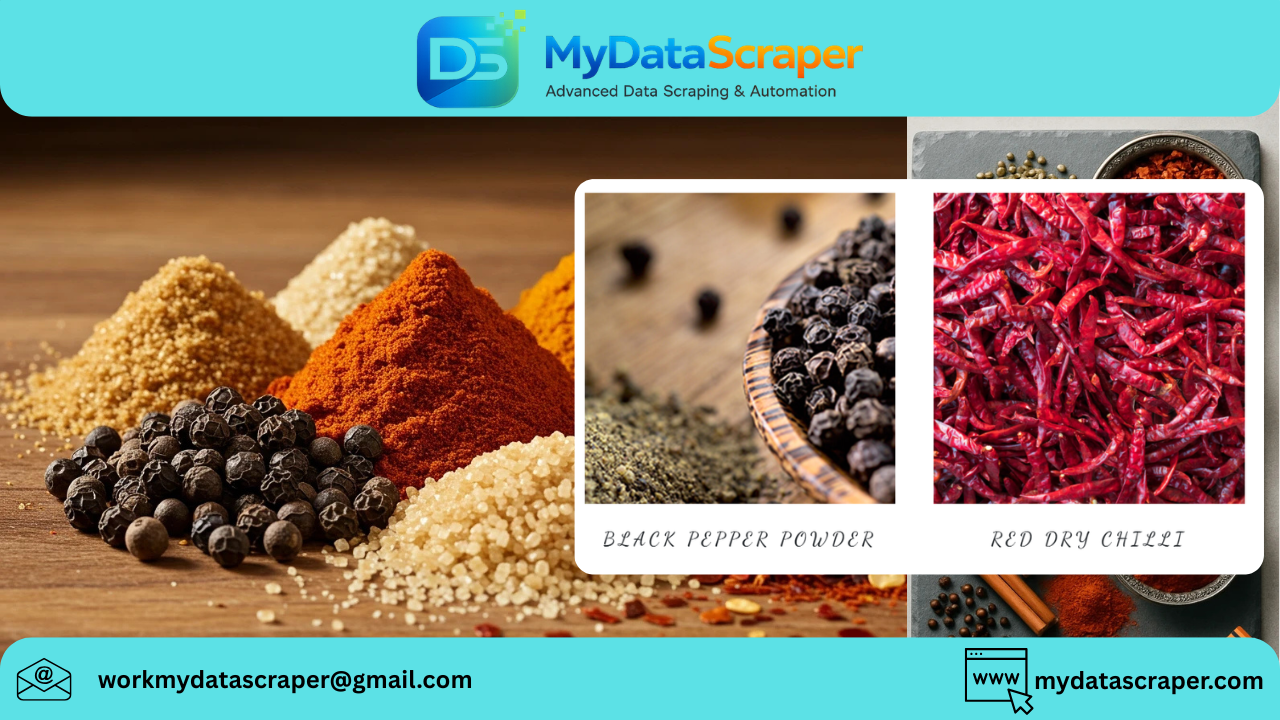
If you’ve ever walked through an Indian kitchen while someone is cooking, you know that spices are the heartbeat of the meal. The aroma of cumin hitting hot oil, the deep color of turmeric, the smoky warmth of paprika—these are not just ingredients; they’re stories, traditions, and culture packed into tiny jars.
But here’s something fascinating: those same spices are now telling stories online too.
Behind every search for “organic turmeric powder,” every late-night cart addition of garam masala, and every recipe-inspired purchase lies valuable demand signals hidden in e-commerce data.
For exporters, spice brands, and traders, this digital footprint is becoming one of the most powerful tools for understanding global demand.
Let’s explore how businesses can uncover these signals and turn them into real export opportunities.
The Digital Spice Bazaar
Traditionally, exporters relied on trade fairs, distributor relationships, and market reports to understand international demand for spices.
But today, the world’s largest spice market might actually be online marketplaces and grocery apps.
Think about platforms like:
- Global marketplaces
- Grocery delivery apps
- Ethnic food e-commerce stores
- Recipe and cooking platforms
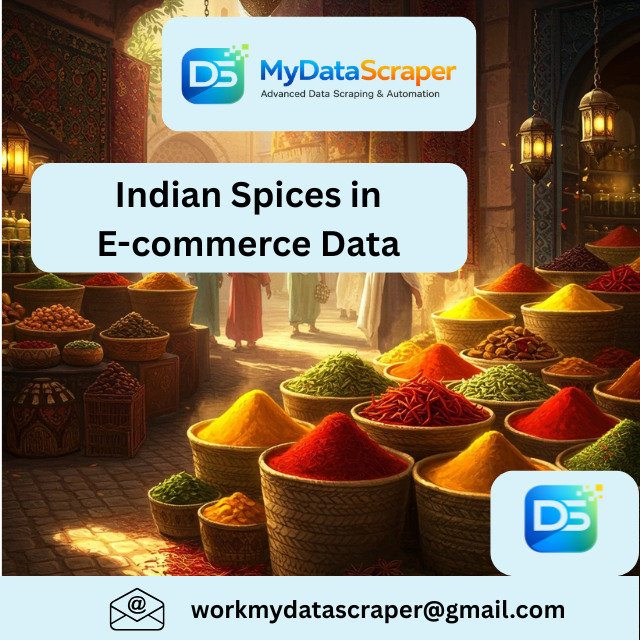
Every day, millions of shoppers search for spices such as:
- Turmeric
- Cumin
- Cardamom
- Garam masala
- Chili powder
- Coriander
Each click, search, and purchase creates a data signal that reflects real consumer demand.
For exporters, this is like having a live dashboard of global spice trends.
A Small Personal Observation
A few months ago, I noticed something interesting while helping a friend who runs a small spice export business.
He had always exported large volumes of turmeric and cumin to a handful of distributors overseas. That was the traditional route.
But when we looked at e-commerce listings in international grocery platforms, we discovered something unexpected.
There was a huge number of searches for “turmeric latte mix.”
Not just turmeric powder—but turmeric blends designed specifically for golden milk drinks.
This was a product category he had never exported before.
That single discovery led him to explore value-added spice products, something that wasn’t obvious from traditional trade data.
And that’s the power of e-commerce demand signals.
What Are Demand Signals in E-commerce?
Demand signals are data indicators that reveal what customers want to buy.
In e-commerce platforms, these signals appear in many forms:
Search Trends
What customers type into search bars reveals real interest.
Examples:
- “Organic turmeric powder”
- “Indian garam masala authentic”
- “Kashmiri chili powder for color”
These searches often highlight growing demand before it appears in import statistics.
Product Listings
The number of listings for a spice category can reveal market saturation or opportunity.
For example:
- Hundreds of turmeric listings in the U.S.
- Only a handful of asafoetida brands
That difference tells exporters where competition exists—and where opportunity lies.
Price Patterns
E-commerce data can show:
- Average selling prices
- Premium vs budget segments
- Organic vs conventional price gaps
This helps exporters understand how products are positioned globally.
Customer Reviews
Customer feedback is a goldmine.
Reviews reveal:
- Flavor expectations
- Packaging preferences
- Quality concerns
- Use cases
For example:
A customer might say:
“This turmeric is great for smoothies but not strong enough for curry.”
That single review gives exporters insight into product usage trends.
Why Indian Spices Are Perfect for E-commerce Insights
India is already the world’s largest producer and exporter of spices.
But the rise of online grocery shopping has introduced new demand patterns.
Global consumers are now exploring spices beyond traditional cooking.
Examples include:
- Turmeric for wellness drinks
- Cardamom for specialty coffee
- Chili powder for international cuisine
- Garam masala for fusion recipes
These emerging uses often appear first in online search behavior before becoming mainstream.
Hidden Export Opportunities in Data
Let’s look at a few types of export insights businesses can uncover through e-commerce data.
1. Emerging Spice Trends
E-commerce search data often reveals new trends earlier than traditional market research.
For instance, growing interest in:
- Turmeric wellness products
- Low-heat chili varieties
- Single-origin spices
- Organic spice powders
These trends help exporters move beyond commodity markets.
2. Regional Demand Differences
Different countries prefer different spice profiles.
For example:
- The U.S. might favor organic turmeric and cinnamon blends
- The UK may show higher demand for garam masala
- Middle Eastern markets may favor cardamom and cumin
E-commerce data can reveal these regional preferences in real time.
3. Packaging Preferences
Something as simple as packaging size can reveal market behavior.
Online listings often show:
- 50g premium spice jars
- 500g bulk packs
- Resealable pouches
These variations help exporters tailor their offerings to specific markets.
4. Brand Positioning
Looking at e-commerce listings can show how brands position their spices:
- Organic
- Premium
- Farm-sourced
- Ayurvedic
- Chef-grade
Understanding these categories helps exporters design better products.
How Businesses Extract These Signals
Extracting demand insights from e-commerce platforms requires structured data collection.
Businesses typically analyze:
- Product listings
- Category rankings
- Pricing data
- Search trends
- Store availability
- Customer reviews
When combined, this data reveals patterns that would otherwise remain hidden.
For example:
If turmeric prices rise while the number of listings increases, that might indicate growing demand rather than oversupply.
The Power of Hyperlocal Data
Interestingly, demand signals can also exist within specific regions or cities.
For instance, one metro area might show strong demand for:
- Organic spices
- Vegan cooking ingredients
- Specialty spice blends
Another region may focus on:
- Bulk cooking spices
- Traditional masalas
This hyperlocal data helps exporters understand where niche markets exist.
A Relatable Example
Imagine you’re a spice exporter deciding which product to introduce to an international market.
You have two options:
- Standard turmeric powder
- Turmeric ginger wellness blend
Traditional export data might only show large volumes of turmeric powder being shipped globally.
But e-commerce data might reveal:
- Thousands of searches for turmeric wellness drinks
- Rapid growth in turmeric latte mixes
- Premium pricing for turmeric blends
That insight could lead you to launch a higher-margin product rather than a commodity spice.
The Rise of Data-Driven Export Strategy
For decades, spice exporters relied heavily on:
- Distributor feedback
- Import statistics
- Trade exhibitions
While those sources remain valuable, they often lag behind real consumer behavior.
E-commerce data provides near real-time signals about global demand.
This allows exporters to:
- Identify new product opportunities
- Monitor competitor activity
- Track price trends
- Understand customer preferences
In many cases, these insights can help businesses move from commodity trading to branded products.
Challenges in Using E-commerce Data
Of course, working with e-commerce data isn’t always simple.
Some common challenges include:
- Large volumes of data
- Frequent price changes
- Platform restrictions
- Regional product variations
Without the right tools, collecting and analyzing this information can be time-consuming.
That’s why many businesses rely on automated data extraction solutions to gather and process marketplace data.
The Future of Spice Exports
The spice industry is entering a fascinating new phase.
Consumers around the world are becoming more adventurous with flavors, exploring:
- Global cuisines
- Health-focused ingredients
- Premium culinary products
This means Indian spices are no longer limited to traditional cooking markets.
They are becoming part of:
- Wellness trends
- Specialty beverages
- Gourmet cooking
- Fusion cuisine
And the earliest signals of these trends are often hidden inside e-commerce platforms.
Exporters who learn how to read these signals will be better positioned to capture emerging opportunities.
Final Thoughts
Indian spices have traveled across oceans for centuries.
From ancient spice routes to modern shipping containers, they’ve always been part of global trade.
But today, the journey begins in a new place: the search bar of an online marketplace.
Every time someone searches for turmeric, compares brands of garam masala, or adds chili powder to their cart, they leave behind a small piece of data.
When analyzed together, these signals reveal powerful insights into global demand.
For spice exporters, food brands, and market analysts, e-commerce data is quickly becoming one of the most valuable tools for understanding where the spice trade is heading next.
What Are Your Thoughts?
Have you noticed new spice trends appearing in online grocery platforms?
Do you think e-commerce data will play a bigger role in shaping export strategies?
Share your thoughts and experiences in the comments—we’d love to hear from you!
Need Help Extracting E-commerce Data?
If you’re looking to uncover demand signals for spices or other food products hidden in e-commerce platforms, the right data tools can make all the difference.
Our team specializes in extracting and analyzing marketplace data to help businesses discover trends, monitor competitors, and identify export opportunities.
👉 For more information or personalized assistance, visit our contact page:
https://www.mydatascraper.com/contact-us/
We’d be happy to help you unlock the insights hidden inside e-commerce data.